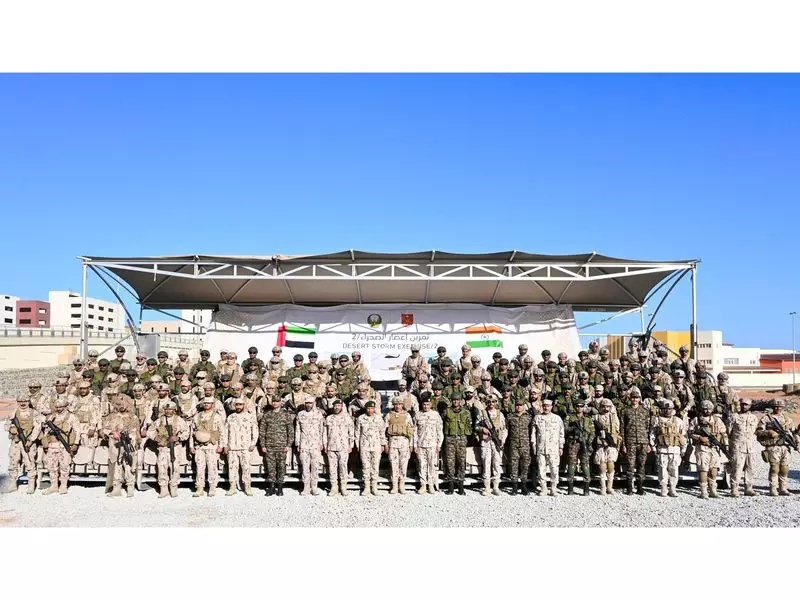
The second chapter of a significant bilateral military engagement has drawn to a successful close, marking a new high in strategic partnership. The India-UAE joint military exercise, Desert Cyclone-II, culminated on January 15 after intensive drills conducted at the Mahajan Field Firing Ranges in Rajasthan.
Forging Camaraderie in the Desert Sands
This landmark exercise, which commenced on January 2, saw the active participation of 45 personnel from the UAE's Zayed First Brigade and soldiers from the Indian Army's Mechanised Infantry Regiment. The primary objective was to refine operational skills and enhance interoperability in the challenging desert and semi-desert terrains that characterise the region. The drills were meticulously planned to simulate real-world scenarios, focusing on joint tactical operations.
The activities encompassed a wide spectrum of modern warfare techniques. Troops from both nations engaged in establishing joint surveillance centres, coordinating intelligence gathering, and executing swift action drills. A key highlight was the practice of heliborne operations, demonstrating rapid deployment capabilities. Furthermore, the exercise included training on the use of drones and counter-unmanned aerial vehicle (UAV) systems, reflecting the evolving nature of contemporary battlefield threats. All operations were conducted under a unified command and control structure, testing and strengthening the seamless integration of the two forces.

A Foundation of Growing Strategic Partnership
The successful conduct of Desert Cyclone-II is not an isolated event but a testament to the rapidly deepening defence and strategic ties between India and the UAE. This joint army exercise builds upon the solid foundation laid by other service-level collaborations. Notably, the two navies have been conducting the 'Zayed Talwar' exercise since 2021, while the air forces engage in the 'Desert Eagle' exercise. This multi-service engagement underscores a comprehensive defence relationship.
The context of this growing partnership is significant. The UAE is a crucial partner for India in the Gulf region, with robust economic, energy, and people-to-people links. Strengthening military cooperation adds a vital security dimension to this multifaceted relationship. Exercises like Desert Cyclone enable both armies to share best practices, learn from each other's operational experiences, and develop a common understanding of procedures, which is crucial for any potential joint missions or humanitarian assistance and disaster relief (HADR) operations.
Implications and the Road Ahead
The culmination of Exercise Desert Cyclone-II signifies a major step forward in the India-UAE defence partnership. The enhanced interoperability and mutual understanding achieved during the two-week drill directly contribute to the security of both nations. It sends a strong signal of their commitment to peace and stability in the region, showcasing their ability to work together effectively in complex environments.
Experts view this as part of India's broader outreach to key West Asian nations, balancing its strategic interests. For the UAE, collaborating with a major military power like India enhances its own defence preparedness. The lessons learned and the bonds forged between the soldiers of the Indian Army and the UAE's Zayed First Brigade will pave the way for more complex and larger-scale exercises in the future. The exercise concluded with a validation exercise and a closing ceremony at Al Hamra, where both contingents displayed their newly honed skills, symbolising the strength of the bilateral bond.
As global and regional dynamics continue to shift, such military-to-military engagements become pillars of durable strategic relationships. The dust settling on the fields of Mahajan leaves behind a clearer path for an even stronger and more coordinated India-UAE defence alliance in the years to come.