India Stresses Diplomacy to De-escalate Middle East Tensions
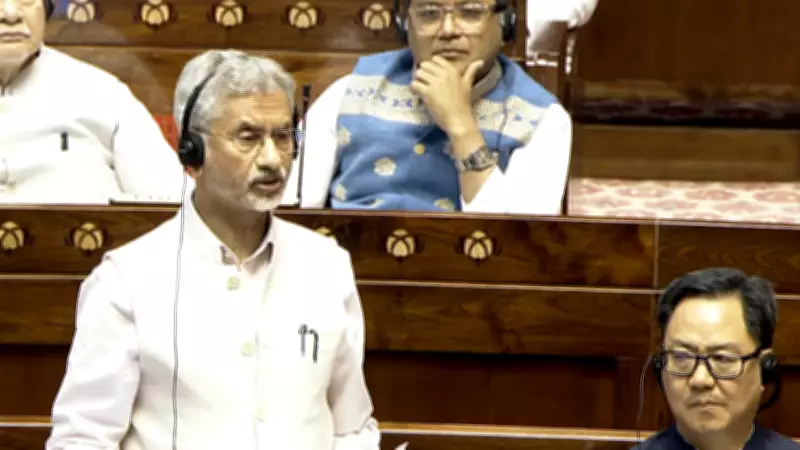
External Affairs Minister S Jaishankar on Monday outlined India's firm stance on the escalating conflict in the Middle East, advocating for dialogue and diplomacy as the primary means to reduce tensions. Speaking in the Rajya Sabha, Jaishankar highlighted that Prime Minister Narendra Modi is closely monitoring developments, with relevant ministries coordinating to ensure effective responses.
Government's Official Position and Actions
Jaishankar referenced a statement issued by the Indian government on February 20, expressing deep concerns and urging all parties to exercise restraint. "We continue to believe that dialogue and diplomacy should be pursued to de-escalate the tensions," he stated, despite interruptions from Opposition MPs. The Cabinet Committee on Security (CCS) convened on March 1 under the Prime Minister's chairmanship to assess the situation, including airstrikes in Iran and subsequent attacks in Gulf countries, with a focus on the safety of the Indian community in the region.
India's Strategic Interests in the Region
The minister emphasized that the ongoing conflict is of particular concern to India due to several critical factors:

- Over one crore Indians reside and work in Gulf nations, with additional thousands in Iran for study or employment.
- The region is vital for India's energy security, serving as a key supplier of oil and gas.
- Potential supply chain disruptions and instability pose serious economic and security risks.
Jaishankar noted that the conflict has intensified, spreading to other countries and significantly deteriorating the security landscape, affecting normal life and activities.
Humanitarian and Diplomatic Efforts
In response to the crisis, the Indian Embassy in Tehran has facilitated the relocation of Indian students to safer areas and assisted business nationals in crossing to Armenia for return to India. The embassy remains fully operational and on high alert. Jaishankar also mentioned that Iran's foreign minister expressed gratitude for India's humanitarian gesture in allowing the Iranian warship Lavan to dock at Kochi port, though leadership-level contacts with Iran are currently challenging.
Casualties and Broader Impact
The conflict has resulted in tragic losses, including two Indian mariners killed and one missing. Broader regional casualties include at least 1,230 deaths in Iran, 397 in Lebanon, 11 in Israel, and seven Americans. The war has displaced over half a million people in Lebanon, with actual numbers likely higher. Global energy markets have been disrupted, pushing oil prices above $100 a barrel and tightening natural gas supplies after QatarEnergy halted production.
Background of the Conflict
The Middle East war began on February 28 with a joint U.S.-Israel strike targeting military bases and strategic facilities across Iran. A key development was the killing of Iran's Supreme Leader Ayatollah Ali Khamenei, described as a "decapitation strike" aimed at crippling Iran's leadership, along with several senior military commanders. The conflict has since expanded, with Hezbollah launching rocket attacks toward northern Israel, exacerbating the regional instability.