

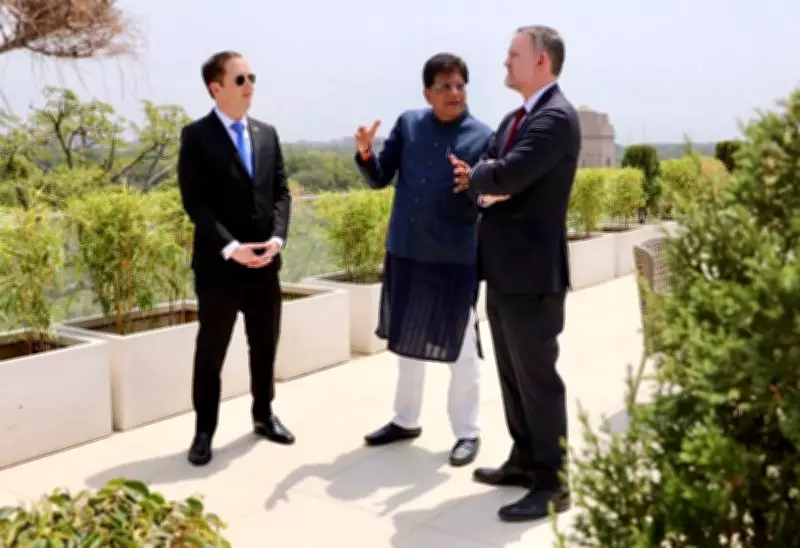
Union Commerce and Industry Minister Piyush Goyal and US Trade Representative Jamieson Greer began bilateral talks in New Delhi on Tuesday to advance negotiations on the first phase of the proposed India-US trade deal. The meeting, held at Vanijya Bhawan, was also attended by Commerce Secretary Rajesh Agrawal and India's chief negotiator Darpan Jain, an Additional Secretary in the Department of Commerce.
High-Level Talks Follow G7 Summit Directive
The ministerial-level discussions come after US President Donald Trump and Prime Minister Narendra Modi met last week on the sidelines of the G7 summit in Evian, France, where both leaders directed officials to expedite the long-pending agreement. Accompanying the US trade delegation in New Delhi was Sergio Gor, the US Ambassador to India, who struck an optimistic note on the progress of the negotiations.
Writing on social media platform X, Ambassador Gor expressed confidence about the direction of the talks. He wrote: “Great to be with Minister @PiyushGoyal and @USTradeRep Ambassador Greer today in New Delhi. Ongoing discussions on finalising the trade deal between the US and India.”

Deadline Pressure as Temporary Tariff Framework Nears Expiry
Trade negotiations were launched by President Trump and Prime Minister Modi in February 2025 in an effort to balance economic interests with demands for greater market access. With the temporary 10% tariff framework introduced by Washington earlier this year set to expire on July 24, both countries are keen to formalise an agreement before the deadline. If concluded as expected next month, the interim pact would serve as the first step towards a broader and more comprehensive Bilateral Trade Agreement (BTA) between India and the United States.
Key Issues on the Table: Market Access and Sectoral Priorities
Officials from both sides are currently focused on resolving key market access issues and aligning their respective trade priorities. The United States, led by Trade Representative Jamieson Greer, is seeking long-term commitments from India to expand access for American agricultural products, energy exports, defence equipment and advanced commercial aircraft. Washington views these sectors as crucial to strengthening bilateral trade and investment ties.
Meanwhile, India is focused on safeguarding its domestic sectors from potential tariff measures by the United States under ongoing Section 301 procedures. New Delhi is also pushing for improved access for its manufactured exports and services sector, both of which remain central to its trade relationship with the United States.






