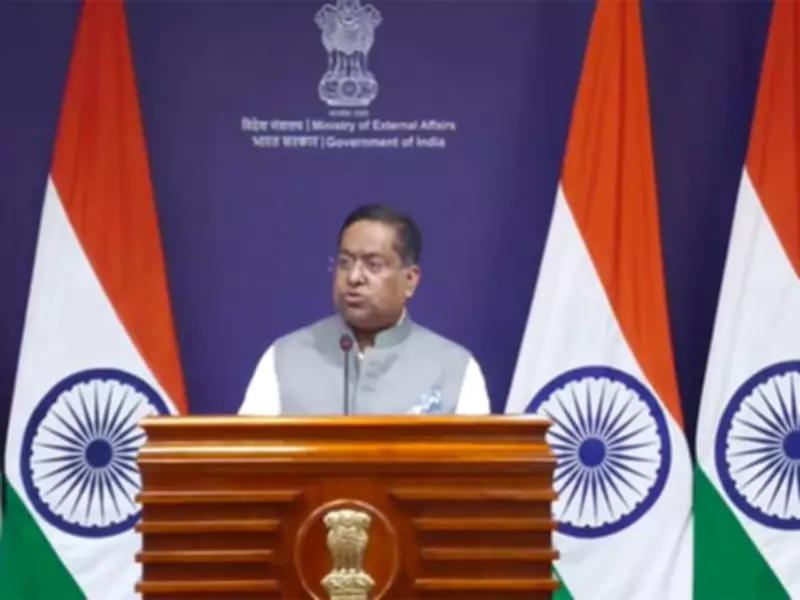
The Ministry of External Affairs (MEA) on Friday stated that India's development assistance for projects in Bangladesh is based on a mutually agreed roadmap that undergoes regular review. This clarification came in response to ongoing discussions surrounding the Teesta River Comprehensive Management and Restoration Project.
MEA spokesperson Randhir Jaiswal, addressing the weekly media briefing in New Delhi, said that India's views on the Teesta project have already been conveyed to the Bangladeshi side. He emphasized that India will factor in all related developments in its overall approach to the Teesta issue.
Details of the MEA Statement
“India's development assistance for projects in Bangladesh is based on a mutually agreed roadmap, which is regularly reviewed. Our views on the Teesta River project have been previously conveyed to the Bangladesh side. We will factor all related developments in our overall approach to the Teesta issue,” Jaiswal said.

When asked about reports that Bangladesh is considering the purchase of J-10 fighter aircraft from China, Jaiswal responded that India closely follows all developments in its neighbourhood. “We closely follow all such developments in our neighbourhood and take appropriate measures as required,” the MEA spokesperson added.
Background on the Teesta River Dispute
The Teesta River, which flows through India and Bangladesh, has been a longstanding subject of discussions between the two countries, particularly over water-sharing and river management issues. Bangladeshi Prime Minister Tarique Rahman recently visited China and claimed to have secured China's support for the Teesta Project.
Previously, Jaiswal had clarified India's stance, noting that such issues are addressed under structured bilateral mechanisms at regular intervals with Dhaka. “Regarding Teesta, India and Bangladesh share 54 rivers. We have structured bilateral mechanisms to discuss all water-related issues, and these mechanisms continue to meet at regular intervals,” he had said in an earlier briefing.
Water Sharing Agreements and Challenges
The Ganga Water Treaty (1996) governs water sharing between India and Bangladesh during the dry season at Farakka Barrage. During lean months, Bangladesh accuses India of releasing insufficient water, impacting agriculture and livelihoods downstream. Rising concerns over climate change have intensified disputes over reduced water availability.
Bangladesh demands an equitable share of Teesta waters, but the agreement remains pending due to opposition from West Bengal, which cites its own water needs. In 2011, an attempt was made to resolve the dispute when then-Prime Minister Manmohan Singh visited Bangladesh. A proposed agreement aimed at allocating 37.5 per cent of Teesta's waters to Bangladesh and 42.5 per cent to India. However, the West Bengal government opposed it, arguing that it would harm its agricultural interests.
Historical Context
An ad-hoc agreement on the sharing of Teesta waters was reached in 1983, with Bangladesh allocated 36 per cent and India 39 per cent of the water flow, leaving 25 per cent to be decided later. However, this agreement was never fully implemented. The MEA's recent remarks underscore India's commitment to a structured and mutually agreed approach, while closely monitoring regional developments.