India's Calculated Pause: Examining Strategic Reservations About Trump's Board of Peace
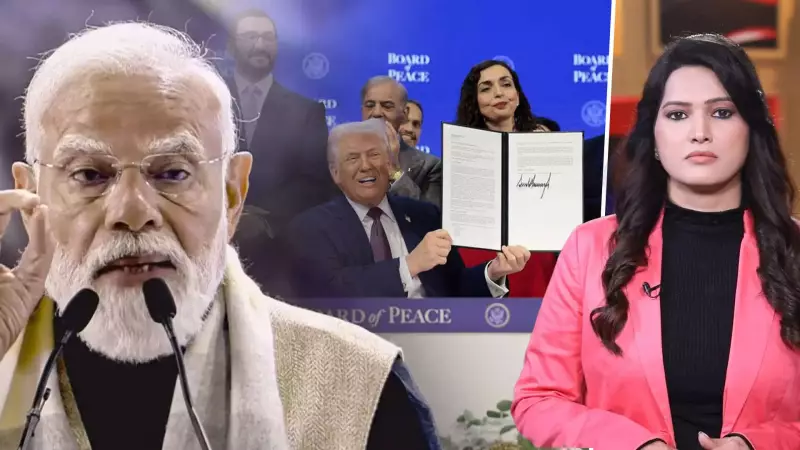
As United States President Donald Trump unveils his "Board of Peace" initiative with considerable fanfare, India's response has been marked by deliberate caution rather than immediate embrace. This strategic hesitation persists despite a direct invitation extended to Prime Minister Narendra Modi to participate in the newly formed platform. The development highlights a significant moment in Indo-US diplomatic relations, where New Delhi's traditional foreign policy principles are being tested against Washington's latest geopolitical proposition.
Questioning the Composition and Global Weight
India's reservations stem from several structural concerns regarding the board's framework. The inclusion of Pakistan alongside key Middle Eastern players, while notably excluding major global powers like Europe, China, and Russia, has raised immediate questions about the initiative's comprehensive reach and effectiveness. This selective composition suggests a regional rather than truly global approach to peacebuilding, which conflicts with India's longstanding commitment to inclusive multilateral forums.
Furthermore, the absence of these significant international actors diminishes the board's potential to address complex global conflicts that require broad-based consensus and participation. India's diplomatic assessment recognizes that peace initiatives lacking representation from key geopolitical stakeholders often struggle to achieve meaningful, lasting outcomes.

Institutional Concerns and Temporal Limitations
Another critical factor influencing India's cautious stance is the board's apparent lack of institutional backing and its direct linkage to President Trump's current term in office. Unlike established international bodies with permanent structures and procedural continuity, this initiative appears tied to the temporal reality of a single presidential administration.
This raises legitimate concerns about the platform's longevity and stability. India, with its strategic emphasis on consistent, long-term diplomatic engagements, is understandably wary of investing significant political capital in a mechanism that could potentially unravel following electoral changes in the United States. The diplomatic resources required for meaningful participation must yield sustainable results, not temporary arrangements.
India's Commitment to Multilateral Principles
New Delhi's hesitation fundamentally reflects its deep-rooted commitment to established multilateral frameworks, particularly the United Nations system. For decades, India has championed the principles of inclusive global governance, where decisions emerge from broad consensus rather than selective groupings. The Board of Peace, in its current configuration, appears to operate outside these traditional structures, creating potential friction with India's preferred diplomatic methodology.
This commitment extends to India's cherished principle of strategic autonomy—the freedom to make independent foreign policy decisions based on national interest rather than external pressure or alignment. Participation in any international initiative must align with this core tenet, ensuring that India's voice remains distinct and its actions sovereign.
Regional Sensitivities and Pakistan's Presence
The inclusion of Pakistan adds another layer of complexity to India's calculus. Given the historically tense relations and ongoing disputes between the two nations, India must carefully consider how its participation alongside Pakistan in this forum might impact bilateral dynamics and regional perceptions. New Delhi's approach to any platform involving Islamabad remains necessarily measured, prioritizing national security concerns and the broader stability of South Asia.
This regional sensitivity underscores why India's response is not merely about the board itself, but about how participation might affect delicate geopolitical balances that New Delhi has worked diligently to maintain through independent diplomacy.

The Path Forward: Prudence Over Premature Commitment
India's current position represents a classic example of strategic prudence in international relations. Rather than rejecting the invitation outright, New Delhi has chosen to pause, observe, and analyze—a diplomatic approach that allows for thorough assessment while keeping future options open. This measured response acknowledges the invitation's significance while prioritizing India's sovereign interests and foreign policy consistency.
As the Board of Peace begins its work, India will likely continue monitoring its developments, achievements, and shortcomings. Any future decision regarding participation will depend on demonstrated effectiveness, structural reforms that address current concerns, and clear alignment with India's multilateral commitments and strategic autonomy. For now, caution prevails—not as rejection, but as responsible statecraft.