India Launches Diplomatic Offensive to Protect Vital Oil Route Through Hormuz Strait
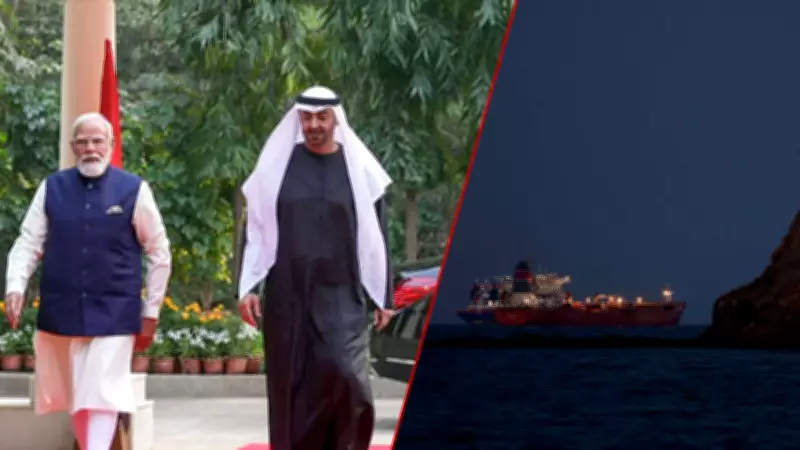
In response to escalating tensions across West Asia, the Indian government has initiated a comprehensive high-level diplomatic campaign aimed at safeguarding its crucial energy interests while simultaneously advocating for regional peace and stability. Prime Minister Narendra Modi engaged in a significant telephone conversation with Sheikh Mohamed bin Zayed Al Nahyan, the President of the United Arab Emirates, underscoring the paramount importance of maintaining security and uninterrupted navigation through the strategically vital Strait of Hormuz.
Critical Energy Lifeline at Stake
The Strait of Hormuz represents one of the world's most essential maritime chokepoints for global oil transportation. Approximately one-fifth of the entire planet's oil supply transits through this narrow passageway, making any potential disruption a matter of grave international concern with far-reaching economic and geopolitical ramifications. For India, which relies heavily on imported oil to fuel its rapidly growing economy, ensuring the free and secure flow of energy resources through this corridor is a non-negotiable component of its national security strategy.
Multi-Pronged Diplomatic Engagement
Beyond the high-level dialogue with the UAE leadership, India has also been proactively engaging directly with Iranian authorities to secure guarantees for the safe passage of its vital oil shipments and other commercial vessels. External Affairs Minister Dr. S. Jaishankar, along with officials from the Ministry of External Affairs, has consistently emphasized India's unwavering commitment to resolving conflicts through peaceful dialogue, advocating for de-escalation, and ensuring the protection of Indian assets and citizens in the region.

This diplomatic maneuvering occurs against a complex backdrop of persistent tensions involving Israel, the United States, and various regional actors. India's nuanced approach reflects a carefully calibrated foreign policy that seeks to balance its deep-rooted national interests with its role as a responsible global stakeholder advocating for stability in an increasingly volatile geopolitical environment.
A Strategic Balancing Act
India's foreign policy apparatus is navigating a delicate path, demonstrating its capacity for independent strategic action while maintaining crucial partnerships. The nation's efforts are focused not only on immediate energy security but also on contributing to a broader framework for long-term peace in West Asia. By engaging key players like the UAE and Iran, India is positioning itself as a credible voice for dialogue and stability, recognizing that its own economic prosperity is inextricably linked to the security of global energy supply chains.