

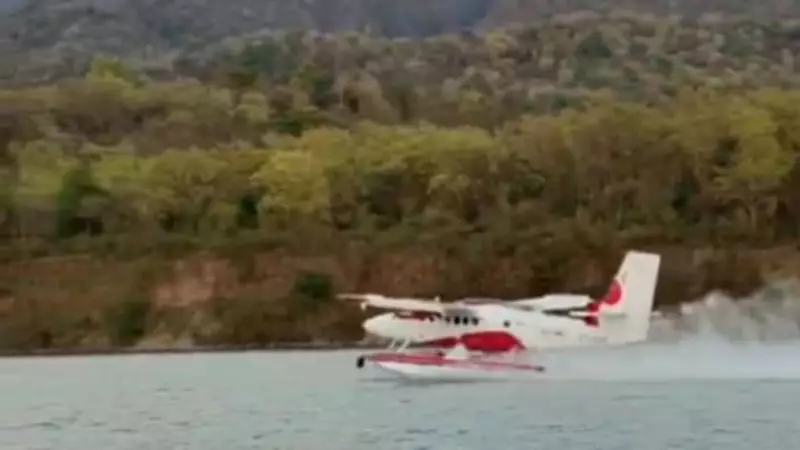
India's First Indigenously Modified Seaplane Takes to the Skies in Uttarakhand
In a groundbreaking development for India's aviation industry, a turboprop aircraft from a non-operational airline has been successfully converted into a seaplane through the affixation of floats, conducting its inaugural test flight on Monday. This historic event marks the first time an aircraft has been modified within India to operate as a seaplane, signaling a significant step forward in the nation's efforts to enhance connectivity and promote tourism.
Test Flight Conducted at Ganga Barrage in Haridwar
The aircraft, a De Havilland Canada DHC-6 Twin Otter, performed a maintenance test flight to and from the Ganga Barrage in Haridwar, Uttarakhand. Originally, the flight was planned for Tehri dam, but it was relocated to the Ganga Barrage for operational reasons. Once regulatory approvals are secured, this seaplane, now owned by SkyHop Aviation under the leadership of Avani Singh, is set to operate in the Andaman and Nicobar Islands upon receiving its license from the Directorate General of Civil Aviation (DGCA).
Government Push and Certification Process
The conversion of this aircraft was spurred by the recent Union Budget, which emphasized incentives for indigenizing seaplane manufacturing and introduced a viability gap funding scheme to support operations. Following this initiative, Union Aviation Secretary Samir Sinha directed the DGCA to certify the modification of the aircraft by adding floats. After the necessary modifications were completed in India, the DGCA issued a certificate of airworthiness and approved its operating procedures, paving the way for future seaplane services.

Background and Future Plans
The aircraft previously belonged to the now-defunct Fly Big airline, which ceased operations some time ago. SkyHop Aviation, led by Avani Singh—daughter of SpiceJet promoter Ajay Singh—aims to be among the first to restart seaplane services in India. The company plans to utilize three of the four De Havilland Canada DHC-6 Twin Otter aircraft from Fly Big, with floats provided by De Havilland to enable amphibious capabilities. The remaining two aircraft are expected to be fitted with floats within the next two months.
Historical Context and Renewed Focus
Historically, seaplanes in India were imported as ready-to-fly units, often struggling with sustained operations. SpiceJet's brief seaplane service in Gujarat years ago faced similar challenges. However, with the government's renewed emphasis on seaplane services under the revised UDAN scheme and budget incentives, officials anticipate a more successful outcome this time. The goal is to establish robust seaplane networks to improve last-mile and remote connectivity, particularly in tourist destinations like the Andaman and Nicobar Islands.
This milestone not only showcases India's growing capabilities in aircraft modification but also aligns with broader efforts to boost domestic aviation infrastructure and tourism. As the country moves forward, seaplane services are poised to play a crucial role in connecting remote areas and enhancing travel experiences.






