

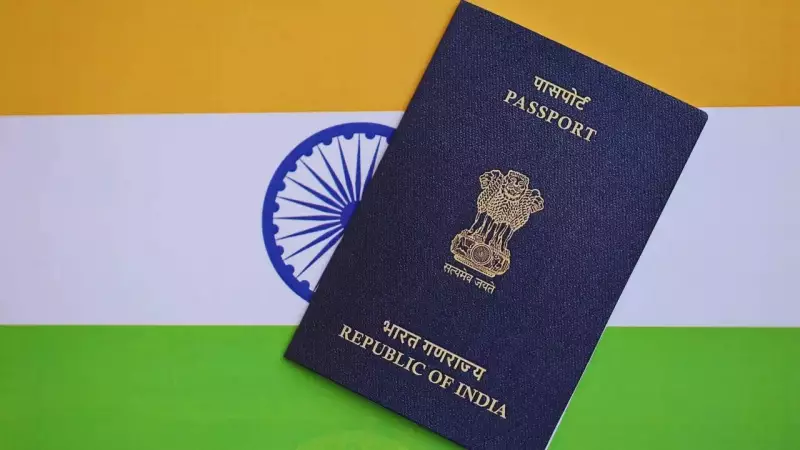
For most travellers, a passport is simply a crucial document for crossing international borders. However, in India, this essential booklet carries a deeper layer of meaning encoded in its very colour. Far from being a mere design choice, the hue of an Indian passport serves as an immediate visual cue for immigration authorities worldwide, revealing the holder's citizenship status, purpose of travel, and official standing.
The Significance of Colour in Indian Passports
The system of coloured passports is a key administrative and diplomatic tool. It allows officials to quickly identify the category of the traveller and the nature of their journey, streamlining processes at immigration checkpoints. Over the years, India has primarily utilised four distinct passport colours: blue, maroon, white, and orange. Each shade is linked to a specific group of citizens or officials and conveys a unique set of privileges and protocols.
The Blue Passport: For the Ordinary Citizen
The most common and widely issued passport in India is the blue one. Officially termed the Ordinary Passport, it is granted to Indian citizens travelling abroad for personal reasons. This includes tourism, education, business trips, employment, or visiting family.

The blue colour instantly signals to authorities that the holder is not representing the Indian government in any official capacity. It contains standard personal details like name, date of birth, photograph, and the passport number. Notably, it is considered one of the strongest proofs of identity.
These passports are typically valid for 10 years for adults and 5 years for minors. Holders of the blue passport do not receive any special privileges or immunities and are subject to the laws of their destination country like any other foreign national.
The Maroon and White Passports: For Officials on Duty
Reserved for government representatives, the maroon and white passports are strictly for official travel.
The maroon passport, known as the Diplomatic Passport, is issued to Indian diplomats and high-ranking officials such as ambassadors, high commissioners, and consuls who are on official diplomatic assignments. Holders of this passport are entitled to special privileges, including expedited immigration clearance and, in many cases, diplomatic immunity. Crucially, this passport must be surrendered once the official assignment concludes.
The white passport is issued to government officials travelling abroad for official work—such as international conferences, training, or meetings—but who do not hold diplomatic status. This includes many bureaucrats and government employees. While it clearly identifies the holder as a government representative on a specific assignment, it does not confer diplomatic immunity.
The Discontinued Orange Passport: A Check on Emigration
The orange passport, which attracted significant public debate, was linked to the Emigration Check Required (ECR) category. It was mainly issued to Indian citizens with lower educational qualifications seeking employment in certain foreign countries.
The colour aimed to help immigration authorities quickly identify individuals who needed clearance from the Protector of Emigrants before travelling for work. This system was designed to protect vulnerable workers from human trafficking, illegal recruitment, and exploitation abroad. However, concerns were raised that it led to discrimination and social stigma. Consequently, the orange passport was discontinued in 2018.
In essence, the colour of an Indian passport is a powerful symbol embedded in the country's administrative framework. It goes beyond aesthetics, functioning as a rapid identification system that defines the traveller's purpose and status on the global stage. Understanding these colours offers a fascinating glimpse into the structured world of international travel and diplomacy.






