

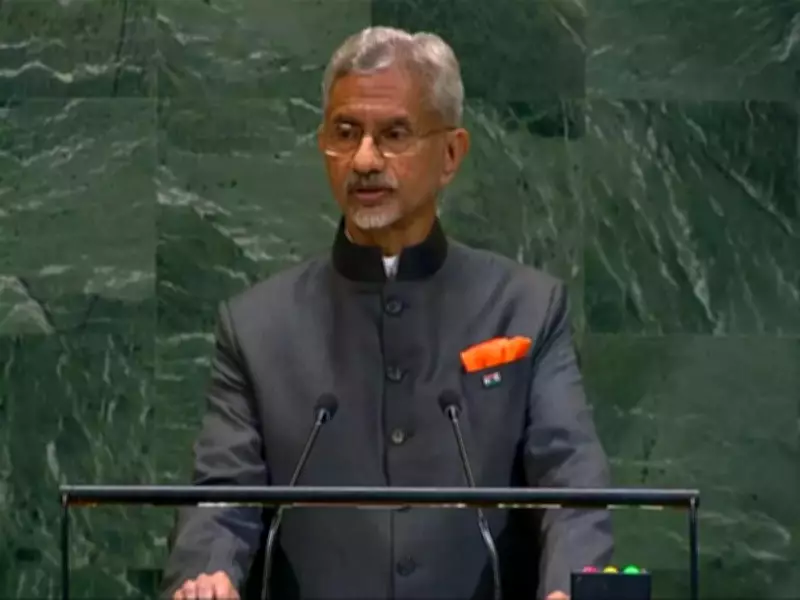
India's Stance on West Asia Conflict Firmly Rooted in National Interest, Says Jaishankar
External Affairs Minister S Jaishankar addressed both Houses of Parliament on Monday, highlighting the ongoing conflict in West Asia as "an issue of particular concern" for India. He emphasized that New Delhi's approach is unequivocally guided by national interest, given the region's strategic importance, which includes hosting approximately one crore Indians and being crucial to India's energy security.
Prioritizing Energy Security and Citizen Safety
Jaishankar stated, "Our national interest, including energy security and trade flows, will always be paramount." He outlined the government's key priorities, which focus on the well-being and security of the Indian community in West Asia, alongside advocating for de-escalation and a return to dialogue and diplomacy. The minister's statement did not yield to opposition demands for condemning the United States and Israel over their attacks on Iran, which resulted in the death of Supreme Leader Ali Hosseini Khamenei.
Humanitarian Gesture Towards Iranian Vessels
In a demonstration of India's humanitarian approach, Jaishankar revealed that New Delhi promptly granted permission for three Iranian naval vessels to dock at Indian ports. The request was made on February 28, coinciding with the conflict's onset, and approved by March 1. "We believe that this was the right thing to do, and the Iranian foreign minister has expressed his country's thanks for this humane gesture," he noted.

The vessels included:
- IRIS Lavan: Docked in Kochi on March 4, with its crew currently in Indian naval facilities.
- IRIS Dena: Sunk by a US submarine off the Sri Lankan coast on March 4.
- IRIS Bushehr: Along with Dena, chose not to avail of the docking permission.
The sinking of frigate Dena, which was returning from a naval exercise in India, raised alarms about the conflict potentially expanding into the Indian Ocean Region, underscoring regional volatility.
Strategic Considerations Behind India's Position
Jaishankar's emphasis on national interest reflects the government's nuanced stance, balancing relationships with key partners. Israel is viewed as a reliable security ally, while Iran's threats and its involvement in issues like Jammu and Kashmir, including criticism of Article 370's abrogation, are noted concerns. Additionally, the importance of stable ties with the US, especially under the Trump administration's unpredictable policies, influences India's cautious diplomacy.
The minister reiterated India's call for an immediate end to the conflict, which has caused significant casualties and infrastructure damage. "I am confident that the House joins me in expressing sorrow at the loss of lives," he said, advocating for respect of sovereignty and territorial integrity in the region.
Government Actions and Coordination
The Cabinet Committee on Security (CCS) discussed the airstrikes in Iran and subsequent attacks in Gulf countries at its March 3 meeting, focusing on the safety of Indian nationals. Measures have been taken to address challenges faced by Indian travelers and students in the region. Jaishankar also highlighted attacks on merchant shipping, noting that two Indian mariners have been lost and another is missing, with Indian crews often forming a large proportion on such vessels.
Prime Minister Narendra Modi is closely monitoring developments and maintaining contact with affected countries' leadership. India has operated around a hundred flights to repatriate stranded citizens, while remaining vigilant about protecting energy security and commerce.
Parliamentary Proceedings and Opposition Response
Jaishankar's statement in the Rajya Sabha was met with a walkout by opposition members, while the Lok Sabha adjourned shortly after reassembling due to protests that erupted as he began speaking. This reflects the political tensions surrounding India's foreign policy decisions in the volatile West Asia landscape.






