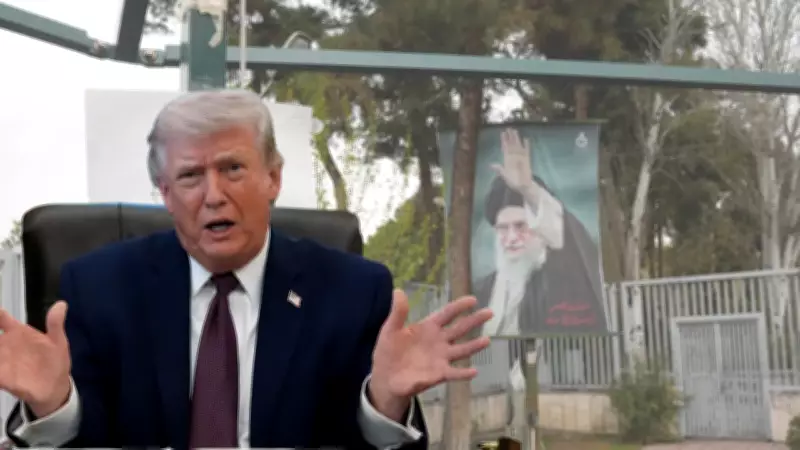
Iran Issues Warning Over Fragile US Ceasefire Amid Israeli Strikes
Iran has issued a stark warning that it may withdraw from a delicate two-week ceasefire with the United States if Israeli military actions against Hezbollah in Lebanon continue. This threat signals a rapid deterioration in a truce that was agreed upon only days ago, highlighting the precarious nature of the agreement.
Ceasefire Violations and Iranian Concerns
According to Iran's state-linked Tasnim news agency, an informed source revealed that Tehran is actively considering the possibility of exiting the ceasefire. The source asserted that the framework of the agreement, which was accepted by Washington, included a commitment to halt hostilities on all fronts, specifically mentioning Hezbollah. However, Iran accuses Israel of carrying out what it describes as brutal attacks in Lebanon, actions it claims breach the terms of the deal.
The warning emerged as Israeli airstrikes targeted Lebanon less than 48 hours after the ceasefire took effect. Lebanese authorities reported that these strikes resulted in at least 182 fatalities and hundreds of injuries, marking one of the deadliest incidents since the conflict escalated earlier this year. In response, Beirut declared a national day of mourning, with flags lowered and public offices closed to honor the victims.

Hezbollah's Retaliation and Divergent Interpretations
Hezbollah retaliated by firing rockets towards Israel, framing its actions as a direct response to what it perceives as violations of the truce. In contrast, Israel maintains that its operations against Hezbollah fall outside the scope of the US-Iran ceasefire agreement. This position has been echoed by US Vice President JD Vance, who stated that the ceasefire does not cover activities in Lebanon.
Tehran has strongly contested this interpretation. Iran's parliament speaker, Mohammad Bagher Ghalibaf, argued that the workable basis for negotiations has already been undermined. He pointed to continued strikes in Lebanon, alleged incursions into Iranian airspace, and ongoing disputes over nuclear enrichment rights as factors eroding trust.
Potential Escalation and Regional Tensions
The Tasnim report further cautioned that Iran's armed forces are assessing potential targets in response to the latest Israeli attacks. In unusually blunt language, the source indicated that if Washington fails to restrain Israel, Iran would consider assisting by force—a remark likely to heighten fears of a broader regional escalation.
These tensions unfold ahead of high-stakes talks expected in Pakistan, where both sides are due to explore a longer-term settlement. The ceasefire itself was brokered under pressure from US President Donald Trump, who had set a deadline for Iran to agree to terms.
Broader Conflict Remains Volatile
Despite the pause in direct hostilities between the US and Iran, the wider conflict remains highly volatile. In recent days, Iranian-linked forces have reportedly launched attacks on US-allied Gulf states, while Israel has insisted it will continue pursuing its objective of disarming Hezbollah. This ongoing instability underscores the fragile nature of the ceasefire and the potential for further deterioration in regional security.