

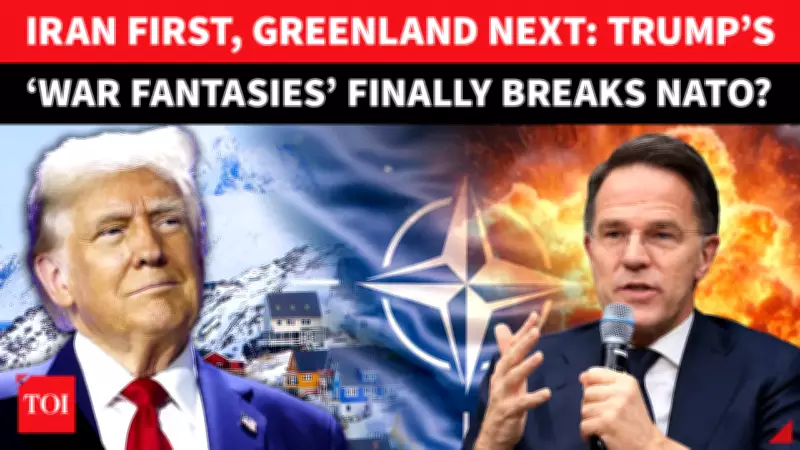
Iran War Reshapes Global Geopolitics, Fuels Trump's Greenland Ambitions
The ongoing U.S. war with Iran is dramatically altering the international landscape, with geopolitical analysts now linking the conflict to former President Donald Trump's renewed and vocal campaign to acquire Greenland. This development comes as a significant rift has emerged between Washington and its traditional NATO allies in Europe, who have notably refused to offer full military or political support during the Iranian engagement.
NATO Alliance Under Strain as Security Divisions Widen
In the wake of the Iran conflict, a profound and widening divide over security threats and strategic priorities has opened between the United States and key European partners within the NATO framework. This transatlantic strain, occurring in the volatile period leading up to the U.S. midterm elections, underscores a fundamental reassessment of alliance commitments and shared defense postures.
Experts point to Greenland's immense strategic value as a primary driver behind Trump's intensified interest. The vast Arctic territory is rich in rare earth minerals, which are critical for modern technology and defense industries. Furthermore, its geographic positioning offers unparalleled advantages for military and economic influence in the increasingly contested Arctic region.

Greenland: Central to Future Power Struggles and Competition with China
Analysts emphasize that control or influence over Greenland has become central to future global power struggles. This is particularly true in the context of intensifying competition between the United States and China, which is actively expanding its polar presence and economic interests. Owning Greenland would provide a significant strategic foothold in the High North, impacting shipping lanes, resource extraction, and surveillance capabilities.
However, the push for Greenland is fraught with political and diplomatic complications. The upcoming U.S. elections introduce a layer of uncertainty, potentially limiting any immediate, concrete action on the acquisition front. The Danish government, which oversees Greenland's foreign and defense policy, has historically and consistently rejected any notion of selling the autonomous territory.
Unresolved Tensions and the Path Forward
The confluence of the Iran war, the NATO rift, and the Greenland proposition leaves international tensions unresolved and critical alliances under severe strain. The situation presents a complex challenge for U.S. foreign policy, balancing assertive national interests with the maintenance of long-standing partnerships. The strategic calculations surrounding Greenland and the Arctic will undoubtedly remain a focal point of geopolitical maneuvering as global powers reposition themselves in this new era of conflict and competition.






