

Iran's Supreme Leader Representative in India: Nuclear Weapons Are Forbidden by Fatwa
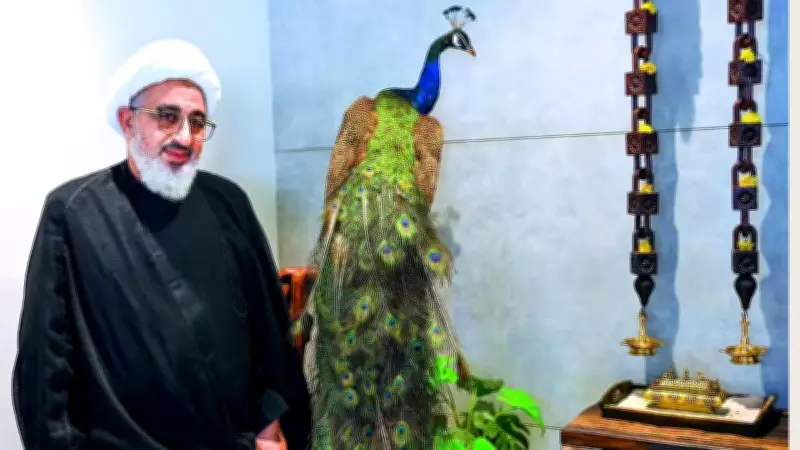
In a significant statement from Chennai, Abdul Majid Hakeem Ilahi, the representative of Iran's supreme leader in India, has unequivocally declared that there is absolutely no space or room for nuclear weapons within Iran's official doctrine. Ilahi, who maintains close working relationships with Ayatollah Ali Khamenei and is a longstanding personal friend of Mojtaba Khamenei, the current supreme leader of Iran, emphasized this position during an exclusive interview.
Nuclear Weapons Declared Haram by Supreme Leader's Fatwa
"Our supreme leader issued a fatwa. He said nuclear weapons are forbidden, haraam. So, we don't have it. We don't want to have it. We are not looking for it," Ilahi stated categorically. He further elaborated that while Iran possesses the capability to develop nuclear weapons if desired, the religious prohibition makes this path unacceptable. "As the supreme leader mentioned, however, if we wanted to have it, they couldn't prevent us," he added, highlighting Iran's technical capacity while reinforcing the doctrinal rejection.
Iran Ready to End West Asia War Immediately
Ilahi expressed Iran's readiness to terminate the ongoing conflict in West Asia without delay, placing responsibility squarely on the nations that initiated hostilities. "Ending the war in West Asia depends on countries that started it," he asserted. He criticized these countries for prolonging the war for economic and strategic gains, including weapon sales and oil price manipulation, showing little concern for impoverished populations or affected nations.

Dismissal of Pakistan's Mediation Claims and Call for Indian Role
The Iranian representative firmly dismissed recent claims that Pakistan is mediating between Iran and the United States. "Our ambassador in Pakistan has denied it too. We have not held any negotiations with Pakistan," he clarified, attributing such reports to mere media speculation. In contrast, he highlighted India's potential for constructive involvement, stating, "India can play a very good role to end this crisis." He noted successful diplomatic exchanges between Indian Prime Minister Narendra Modi and Iranian President Masoud Pezeshkian, as well as between foreign ministers, focusing on regional peace.
Stable and Historical India-Iran Relations
Ilahi painted a vivid picture of the deep-rooted ties between India and Iran, tracing their friendship back an impressive 5,000 years. "Iran is connected to India by culture, wisdom, and philosophy. I feel at home here," he shared, praising the Indian people for their kindness, honesty, and wisdom. He expressed confidence in the stability of bilateral relations, emphasizing that Indian leaders' wisdom prevents third-party interference in their decisions.
Humanitarian Crisis and Strait of Hormuz Security Concerns
The representative detailed severe humanitarian impacts of the conflict, reporting over 270 infants under two years old killed, attacks on Tehran's Gandhi Children's Hospital, and approximately 175 primary school girls fatalities. He condemned assaults on civilian infrastructure including schools, mosques, and historical sites. Regarding energy security, Ilahi acknowledged instability in the Strait of Hormuz, urging all nations to pressure for an end to the war to ensure stable energy supplies.
Insights into Iran's New Supreme Leader
Offering personal insights, Ilahi described Mojtaba Khamenei, Iran's new supreme leader and his classmate for three decades, as an intellectual and humble individual. "He lives in a rented house. He doesn't have a car. He doesn't have a bank account," Ilahi revealed, illustrating a remarkably simple lifestyle where even basic necessities like milk and bread required borrowing. He countered perceptions of radicalism, portraying Khamenei as strong, dignified, honest, and kind, never compromising his humanity.

Global LPG Shortage and Appeal for Collective Action
Addressing broader economic repercussions, Ilahi linked the global LPG shortage affecting India, the Philippines, Indonesia, Malaysia, Thailand, and others directly to the war. He made a heartfelt appeal: "My request to these countries and to their leaders is to come together and ask those who initiated this war to stop it. Iran didn't create this crisis." This call underscores the interconnected nature of regional conflicts and global economic stability.





