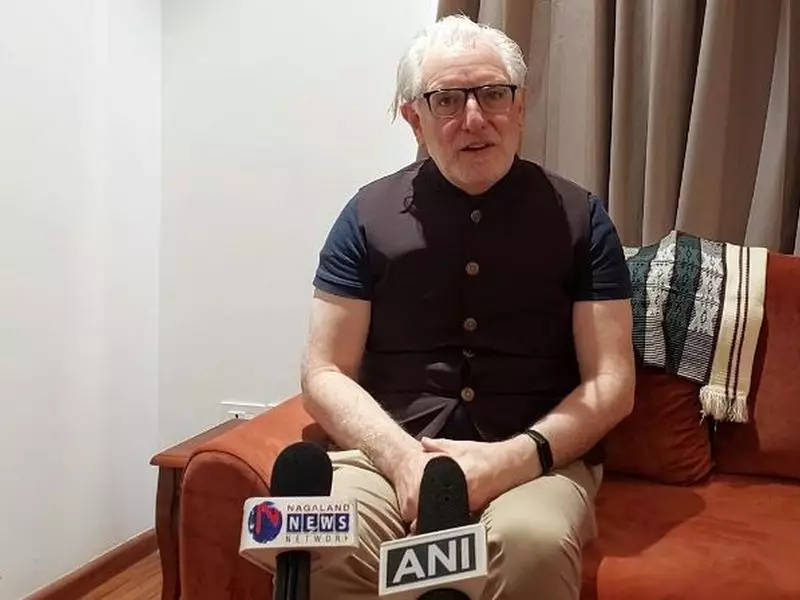
The scenic hills of Nagaland recently played host to a significant diplomatic engagement aimed at weaving stronger cultural threads between the North-Eastern state and the distant island of Ireland. The visit of Ireland's Ambassador to India, Kevin Kelly, marked a pivotal step in fostering mutual understanding and exploring collaborative avenues between the two distinct yet culturally rich regions.
A Journey of Connection and Discovery
Ambassador Kelly's itinerary from April 22 to April 25, 2024, was packed with meaningful interactions. His mission was clear: to build upon existing people-to-people links and identify new areas for partnership. The ambassador's engagements were diverse, ranging from high-level governmental discussions to immersive cultural experiences. A key highlight was his visit to the Kohima World War II Museum, a site that holds profound historical significance and resonated with Ireland's own deep sense of history and remembrance.
Beyond museums, the ambassador's schedule reflected a desire to understand Nagaland's living culture and contemporary aspirations. He held substantive meetings with Nagaland's Chief Minister, Neiphiu Rio, and other senior state officials. These dialogues moved beyond ceremonial pleasantries to explore tangible areas of cooperation. The conversations reportedly centered on potential collaboration in crucial sectors such as education, skill development, and sustainable tourism, aligning with both Nagaland's development goals and Ireland's expertise.

Building Bridges Through Education and Shared Values
A cornerstone of the visit was the focus on academic and youth exchange. Ambassador Kelly's interaction with students and faculty at St. Joseph's College in Jakhama underscored the importance of educational ties. Ireland, with its world-renowned universities and strong emphasis on research, presents a compelling destination for Naga students. The discussions likely explored avenues for scholarships, faculty exchange programs, and partnerships in fields where Ireland excels, potentially including technology, environmental sciences, and literature.
The cultural resonance between Ireland and Nagaland, both regions with a strong sense of tribal identity and a history of preserving unique traditions, formed a subtle yet powerful backdrop to the visit. This shared context provides a fertile ground for cultural diplomacy. The exchange is not merely governmental but is deeply rooted in civil society and people-to-people connections, which have been nurtured over time through various informal channels and shared interests in music, art, and community life.
Outcomes and the Path Forward
The visit of Ambassador Kelly has successfully moved the Ireland-Nagaland relationship from a phase of general goodwill to one of structured dialogue. The key outcomes can be summarized as follows:
- Enhanced Political Dialogue: Opening direct channels between the Irish embassy and the Nagaland government for future collaboration.
- Education and Skills Focus: Identifying concrete sectors for academic partnership and youth capacity building.
- Cultural Affirmation: Recognizing and leveraging the shared values of community, heritage, and resilience as a basis for deeper understanding.
This diplomatic engagement is expected to pave the way for more specialized delegations, possibly in the fields of agriculture, information technology, and eco-tourism. The emphasis on sustainable and community-led development models reflects a modern approach to international cooperation that respects local contexts. As Ambassador Kelly's visit concludes, it leaves behind a reinforced framework for Ireland and Nagaland to learn from each other's experiences, celebrate their distinct cultures, and build a partnership that contributes to the broader tapestry of India-Ireland relations.