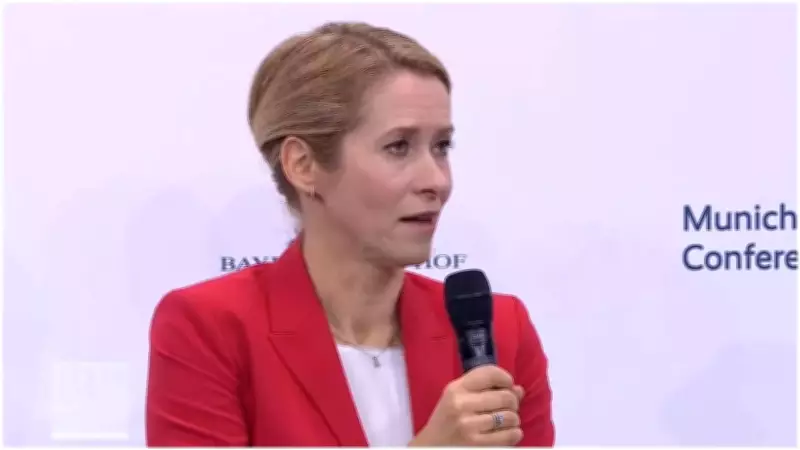
EU's Kallas Delivers Scathing Retort to US's Rubio Over Freedom of Speech Rankings
In a fiery exchange at the Munich Security Conference, European Commission Vice President Kaja Kallas issued a sharp and pointed response to US State Secretary Marco Rubio regarding the contentious issue of freedom of speech. Kallas, representing Estonia, boldly asserted that there is less freedom of speech in the United States compared to her home country, sparking a diplomatic debate on global platforms.
Kallas Cites Global Index to Challenge Rubio's Remarks
During her address, Kallas referenced international rankings to underscore her argument. "I come from a country that ranks second in the freedom of speech index, and for me to hear lectures about free speech from a country that ranks 58th in that same index is… interesting," she stated, delivering a clear and calculated critique. This comment was a direct rebuttal to earlier remarks made by Marco Rubio, who had commented on the state of freedom of speech in Europe, prompting Kallas to highlight the perceived hypocrisy in his stance.
Background on the Data and Social Media Reactions
The data Kallas referred to is compiled by Reporters Without Borders (RSF), an organization founded by Robert Ménard, a former member of the Revolutionary Communist League from 1973 to 1979. This index is widely recognized for assessing press freedom and speech liberties globally. Following the conference, several users on social media platforms amplified the discussion, pointing to the RSF data to support or critique the claims made by both officials. The exchange has ignited broader conversations about comparative freedoms and the credibility of such international metrics.

Key Points from the Munich Security Conference Clash:
- Kaja Kallas emphasized Estonia's superior ranking in freedom of speech indexes compared to the United States.
- Marco Rubio's prior comments on European free speech norms triggered Kallas's response.
- The debate centers on data from Reporters Without Borders, adding a layer of factual scrutiny to the political discourse.
- Social media users have actively engaged with the topic, reflecting divided opinions on the validity of the rankings and the nature of free speech in different regions.
This incident underscores ongoing tensions in international relations regarding civil liberties and the role of data in political arguments. As global leaders continue to navigate complex dialogues, such exchanges highlight the importance of evidence-based discussions in shaping public policy and diplomatic engagements.