International Bus Service Linking Kolkata, Dhaka and Agartala Resumes After 18-Month Hiatus
The resumption of the international bus service connecting Kolkata, Dhaka and Agartala after more than a year and a half has reignited hopes for a tourism revival in central Kolkata, where thousands of residents depend on visitors from across the border for their livelihoods.
Service Restoration and Operational Details
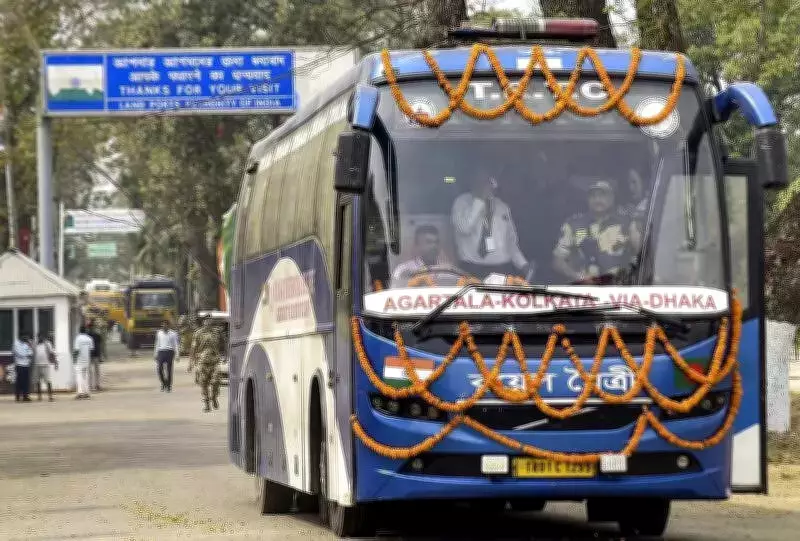
The direct bus linking Agartala and Kolkata via Dhaka officially resumed operations on February 24, with the first service departing from Agartala. A few days earlier, an inaugural run was conducted to signal the restoration of this crucial route, which had remained suspended since August 2024 due to political instability in Bangladesh and various visa complications.
According to official statements, the buses will initially operate twice weekly, with plans to potentially increase frequency to three times per week in the near future. The revival of this transportation corridor followed recent elections in Bangladesh that brought the Bangladesh Nationalist Party (BNP) to power with a decisive two-thirds majority.

Bilateral Significance and Economic Impact
Stakeholders on both sides of the border have described the service resumption as a clear indicator of improving bilateral relations and a renewed emphasis on people-to-people contact between the neighboring nations. For Kolkata specifically, this development carries profound significance that extends far beyond diplomatic and political considerations.
In central Kolkata areas including Marquis Street, Free School Street, Collin Street and Rafi Ahmed Kidwai Road—often referred to locally as 'Mini Bangladesh' for their concentration of hotels, eateries, currency exchanges and retail outlets catering specifically to Bangladeshi visitors—the past 18 months have been particularly challenging.
Economic Challenges During the Suspension Period
Since the suspension of the bus service and the tightening of visa regulations, footfall from Bangladesh dropped by nearly 80 percent according to local traders. Currently, most arrivals are limited to those holding medical visas, representing a significant reduction from the once-steady stream of tourists that previously sustained the local economy.
This dramatic decline in visitors forced several small businesses to either shut down completely or significantly scale back their operations. The economic hardship has been particularly acute in areas where thousands of people depend directly on tourism from across the border for their daily livelihoods.
Stakeholder Perspectives and Future Outlook
"This is a very positive development that rekindles hope for improvement in the situation in the coming days," said Monotosh Sarkar, president of the transport association between India and Bangladesh. "This will be a great boon for tourism in the Marquis Street area, where thousands of people depend on tourism from across the border for their livelihoods."
Traders in central Kolkata are viewing the movement of buses across the border as more than just a logistical milestone. "We feel a sense of relief with the bus service starting again," said Hyder Ali Khan, general secretary of the Free School Street Traders' Association. "If connectivity improves and visa processes ease further, we are hopeful that visitors will gradually return. But it may take some time for confidence to be fully restored."
Seasonal Expectations and Eid Preparations
The timing of the service restoration is particularly significant as the month of Ramzan typically sees maximum tourist arrivals in Kolkata for Eid preparations. "We hope the situation improves in the next few days so that tourists can start coming to Kolkata in time for Eid shopping," said Mohammad Intezar, a local businessman in the affected area.
The resumption of this vital transportation link represents not just restored connectivity but renewed economic hope for communities that have struggled through nearly two years of reduced cross-border movement and commerce.