In a stunning twist to the political upheaval in Venezuela, new evidence suggests President Nicolás Maduro's dramatic fall from power may have been orchestrated not by external forces alone, but from within the very heart of his regime. Reports emerging on January 5, 2026, point to a narrative of betrayal and secret diplomacy that reshapes our understanding of the crisis.
Secret Meetings in Qatar: The Inside Job
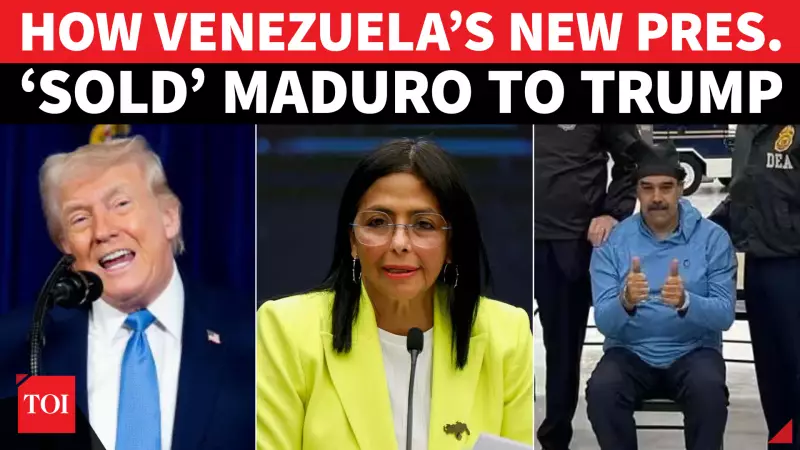
Central to these revelations are discreet meetings held in Qatar. Key figures involved were Venezuela's Vice President Delcy Rodríguez and her brother, Jorge Rodríguez. According to sources, they engaged with intermediaries representing the United States government under the Trump administration. The agenda was singular and consequential: planning for a political transition in a Venezuela without Maduro.
During these covert discussions, Delcy Rodríguez is reported to have strategically positioned herself as a "more acceptable" alternative to the embattled president for the international community, particularly Washington. This manoeuvring has directly fueled intense speculation that Maduro's eventual capture was, in fact, a well-planned inside operation rather than a simple military defeat.

A Calculated Transition, Not a Collapse
The disclosures force a critical re-examination of the power shift in Caracas. They raise profound questions about loyalty and betrayal at the highest levels of the Chavista regime. More significantly, they suggest that the United States may have been engineering a controlled and managed transition of power, aiming to avoid the chaos of a complete regime collapse.
This strategy, if true, indicates a preference for stability with a familiar, albeit reconfigured, leadership over the unpredictable fallout of a total vacuum. The goal appears to have been to replace Maduro with a figure from his inner circle who could maintain a degree of continuity while being palatable to U.S. interests.
Reactions and the Global Ripple Effect
The fallout from these allegations is already spreading. Maduro's son has publicly denounced what he calls "traitors," reflecting the deep fractures within the ruling establishment. Internationally, the reported U.S. manoeuvring has drawn sharp responses. China's President Xi Jinping has issued warnings to the Trump administration against "acting like the world's policeman," highlighting the global stakes involved, especially concerning Venezuela's vast oil resources which are crucial for China's investments.
Furthermore, the situation has triggered a complex geopolitical chain reaction. From Iran to Russia, leaders are reportedly reassessing their positions in light of the U.S.'s demonstrated strategy in Venezuela, worrying about who might be next.
The story of Maduro's downfall is evolving from a tale of external pressure to a more intricate saga of internal betrayal and secret diplomacy. The full truth of what transpired in Qatar and within the halls of power in Caracas may still be emerging, but it is clear that the political earthquake in Venezuela has layers of intrigue yet to be fully uncovered.