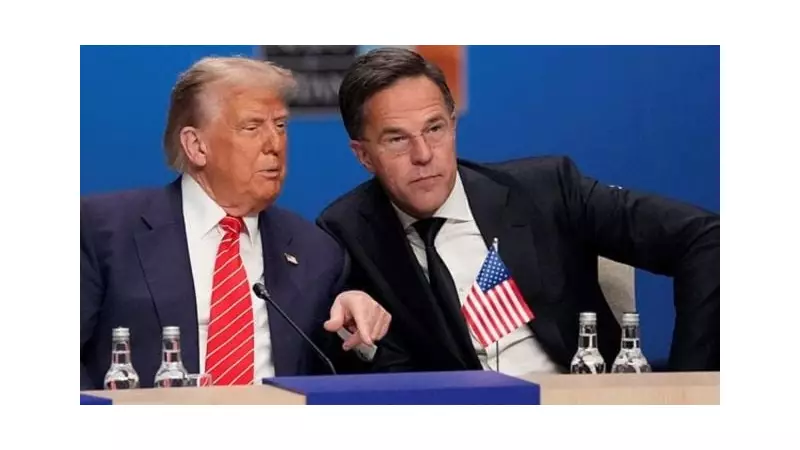
In a significant development for Arctic geopolitics, NATO Secretary General Mark Rutte announced on Friday that he is working closely with Danish Prime Minister Mette Frederiksen to bolster deterrence and defense capabilities in the Arctic region. This move comes as former President Donald Trump claims to have secured total and permanent United States access to Greenland through a new agreement with NATO.
Arctic Security Takes Center Stage
Rutte emphasized the urgent need for NATO allies to increase their commitment to Arctic security, citing growing threats from Russia and China. He made these remarks in a post on social media platform X, highlighting the strategic importance of the vast frozen territory, which is roughly three times the size of Texas.
Meanwhile, Prime Minister Mette Frederiksen is set to travel to Nuuk, the capital of Greenland, to meet with Greenland's Prime Minister Jens-Frederik Nielsen. This visit underscores Denmark's proactive stance in addressing Arctic defense concerns and strengthening partnerships in the region.

EU Pledges Increased Investment in Greenland
The European Union, including member states Denmark and Finland, has pledged to substantially increase investment in Greenland. However, it remains clear that the United States currently possesses the hard-power capability to effectively reach and operate in this remote area, as reported by Reuters.
This framework deal emerged as Trump backed off from tariff threats against Europe and ruled out taking Greenland by force, providing some respite in what had been escalating into the most significant rupture in transatlantic relations in decades.
Market Reactions and Diplomatic Fallout
Trump's policy reversal triggered a rebound in European markets and propelled Wall Street's main indexes toward record highs. Despite this positive economic response, questions linger about the extent of damage already inflicted on transatlantic ties and business confidence.
Details of any potential agreement remain unclear, with Denmark firmly asserting that its sovereignty over Greenland is not negotiable. EU foreign policy chief Kaja Kallas noted that the bloc's relations with the United States have "taken a big blow" over the past week, prompting EU leaders to convene for an emergency summit.
Greenland's Stance on Sovereignty
Greenland Prime Minister Jens-Frederik Nielsen welcomed Trump's comments but expressed uncertainty about the specifics of any deal. "I don't know what there is in the agreement, or the deal, about my country," he told reporters in Nuuk.
Nielsen emphasized Greenland's willingness to discuss various partnerships but drew a clear red line on sovereignty. "We are ready to discuss a lot of things and we are ready to negotiate a better partnership and so on. But sovereignty is a red line," he stated, addressing reports that Trump might seek control of areas around US military bases in Greenland.
"We cannot cross the red lines. We have to respect our territorial integrity. We have to respect international law and sovereignty," Nielsen added firmly.
Trump's Assertions on Greenland Access
Speaking to reporters aboard Air Force One after returning from the World Economic Forum in Davos, Switzerland, Trump revealed that a new deal is being negotiated that would be "much more generous to the United States, so much more generous."
While avoiding direct questions on sovereignty, Trump asserted, "We have to have the ability to do exactly what we want to do." Earlier, in an interview with Fox Business Network, he claimed the deal would essentially grant "total access" for the United States to Greenland, with no time limit.
NATO and US Discussions in Davos
A source familiar with the matter disclosed that NATO Secretary General Mark Rutte and Donald Trump agreed in Davos to initiate further talks between the United States, Denmark, and Greenland. These discussions aim to update a 1951 agreement that governs US military access and presence on the Arctic island.
The proposed framework also includes provisions to prohibit Chinese and Russian investments in Greenland, reflecting broader strategic concerns about foreign influence in the Arctic region.

As Arctic security becomes increasingly contested, these developments highlight the complex interplay between defense alliances, national sovereignty, and global power dynamics in one of the world's most strategically vital regions.