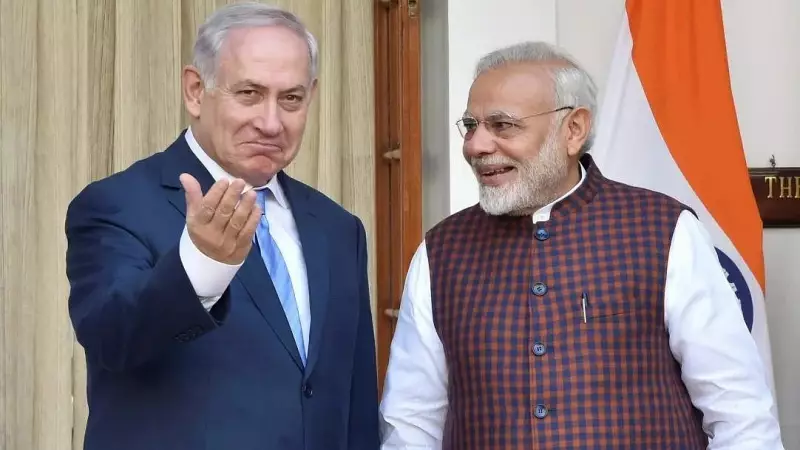
In a significant affirmation of bilateral ties, Israeli Prime Minister Benjamin Netanyahu has publicly announced his intention to meet with Indian Prime Minister Narendra Modi in the near future. This confirmation underscores the ongoing high-level engagement between the two nations, which has grown substantially across strategic and economic domains in recent years.
Netanyahu's Public Acknowledgement of the Partnership
The Israeli leader made the statement while addressing a delegation of Indian journalists in Jerusalem. He explicitly noted, "We value our partnership with India... I will meet my friend, Prime Minister Narendra Modi, in the near future." This direct reference to PM Modi as a "friend" highlights the personal rapport that has often characterized the relationship between the two countries' leadership. Netanyahu's remarks were not tied to a specific date or venue, but the public commitment signals a mutual desire to sustain the momentum in dialogue.
This upcoming interaction is poised to continue the tradition of regular top-level exchanges. Prime Minister Modi's historic visit to Israel in July 2017 was a landmark, being the first by an Indian premier. Netanyahu reciprocated with a visit to India in January 2018. Since then, both leaders have engaged in multiple conversations on the sidelines of international forums, maintaining consistent diplomatic contact.

The Pillars of the India-Israel Strategic Partnership
The relationship between New Delhi and Jerusalem has evolved into a multi-faceted partnership. A cornerstone of this collaboration is defence and security cooperation. Israel has emerged as a key defence supplier to India, with significant deals in areas like missile systems, drones, and surveillance technology. This partnership is driven by shared security concerns and a common fight against terrorism.
Beyond defence, the partnership thrives in several critical sectors:
- Agriculture and Water Technology: Israel's expertise in drip irrigation and water management is being leveraged in numerous Centres of Excellence across Indian states, helping to improve farm productivity and conserve water.
- Technology and Innovation: Collaboration in high-tech sectors, including cybersecurity, artificial intelligence, and space technology, is a growing focus area for both innovation-driven economies.
- Economic and Trade Ties: Bilateral trade has been steadily increasing, with diamonds, pharmaceuticals, and machinery forming major components. Both nations are working towards a broader Free Trade Agreement to further boost economic links.
The partnership operates with a strong understanding of each other's strategic autonomy and regional considerations, allowing it to remain robust despite the complexities of West Asian geopolitics.
Context and Forward Momentum
Netanyahu's statement comes at a time when both leaders are navigating significant domestic and global challenges. For Israel, the ongoing conflict with Hamas and regional tensions remain paramount. For India, maintaining a balanced position in the Middle East while advancing its national interests is a key diplomatic objective. The planned meeting indicates that both sides view the bilateral relationship as a standalone pillar of their foreign policy, valuable in its own right.
The announcement sets the stage for the next chapter in the India-Israel relationship. When the meeting materializes, the leaders are expected to review the progress of existing collaborations and chart a course for future cooperation. Potential discussion points could include:
- Advancing negotiations on the Free Trade Agreement (FTA).
- Deepening joint research and development in emerging technologies.
- Enhancing cooperation in homeland security and counter-terrorism.
- Exploring new avenues in energy, particularly renewable sources.
The reaffirmation of a high-level meeting soon serves as a powerful signal that the India-Israel strategic partnership remains on a positive and forward-looking trajectory. It reinforces the commitment at the highest levels to nurture a relationship built on mutual respect, shared democratic values, and concrete cooperation that delivers benefits for the people of both nations.