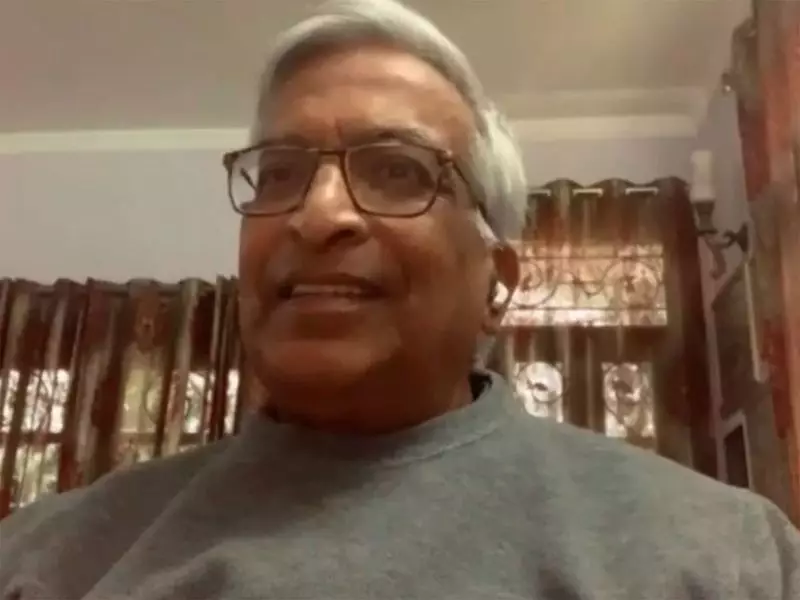
In a sharp critique of recent Pakistani media narratives, former Indian High Commissioner to Pakistan, Ajay Bisaria, has labeled reports of a handshake between External Affairs Minister S. Jaishankar and a Pakistani leader in Dhaka as "laughable." This dismissal comes amidst a broader observation that Pakistani ministers are engaging in what he describes as "stalking" Indian leaders on the global stage.
Former Envoy Dismisses 'Fabricated' Diplomatic Encounter
Ajay Bisaria, who served as India's top diplomat in Islamabad, took to social media to refute claims circulating in sections of the Pakistani press. These reports suggested that EAM S. Jaishankar had a brief, informal interaction with Pakistan's Foreign Minister Ishaq Dar on the sidelines of a recent meeting in Dhaka, Bangladesh. Bisaria categorically denied any such encounter took place, calling the narrative a complete fabrication.
He pointed out that the two ministers were not even present in the same room at the purported time of the alleged handshake. This incident, according to Bisaria, is part of a pattern where Pakistani officials and media create illusory moments of diplomatic engagement with Indian counterparts, often where none exist. The former envoy's remarks underscore the deep-seated mistrust and the propensity for misinformation that continues to plague bilateral channels.

The Pattern of 'Stalking' Indian Leadership
Beyond the specific Dhaka incident, Bisaria highlighted a persistent trend. He noted that Pakistani ministers frequently attempt to position themselves in proximity to Indian leaders at international forums, such as the United Nations, seeking photo opportunities or moments that can be spun into a narrative of thawing relations. This behavior, he implied, is a tactical move to project an image of dialogue and normalcy to both domestic and international audiences, often without any substantive diplomatic groundwork.
This "stalkerish" behavior, as termed by observers, reflects Islamabad's anxiety to be seen engaging with New Delhi, especially at a time when India's global stature is rising and Pakistan faces significant economic and political challenges. The Indian diplomatic establishment has largely maintained a stance of minimal engagement, insisting that talks cannot resume until Pakistan creates a conducive environment free from terrorism and hostility.
Context of Frozen Relations and Indian Stance
The current diplomatic freeze between India and Pakistan has been in place since India's decision to revoke the special status of Jammu and Kashmir in August 2019. Since then, high-level political contact has been virtually non-existent. India's consistent position has been that terrorism and talks cannot go hand-in-hand.
External Affairs Minister S. Jaishankar has repeatedly emphasized that the onus is on Pakistan to address cross-border terrorism as a precondition for any meaningful dialogue. In this context, the manufactured reports of handshakes are seen as attempts to bypass this core issue and create an illusion of progress. The Indian side views such tactics as disingenuous and a distraction from the substantive matters that block the path to normalization.
The reaction from Bisaria, a seasoned diplomat who was at the helm during the Pulwama crisis and subsequent developments, carries significant weight. His public mockery of the Pakistani reports signals a firm Indian refusal to lend credibility to such manufactured diplomatic theater. It reinforces the message that real diplomacy requires honest intent and action, not staged encounters or media spin.
As both nations navigate a complex geopolitical landscape, these episodes highlight the chasm that exists. For any genuine breakthrough, actions addressing India's security concerns will speak far louder than any disputed handshake ever could.