

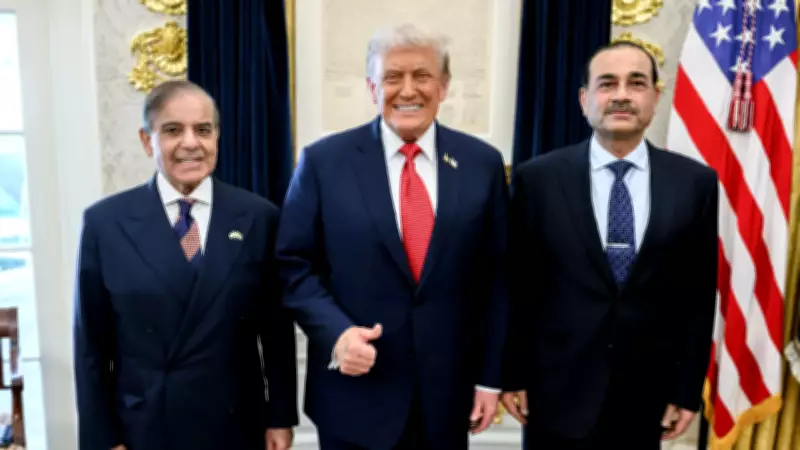
Pakistan Steps into Global Spotlight as US-Iran Mediator
In a surprising geopolitical development, Pakistan has taken center stage in international diplomacy, positioning itself as a direct mediator between the United States and Iran. This role may astonish many observers, given Pakistan's alliance with Saudi Arabia, its ongoing conflict with Afghanistan, and its limited history in resolving complex international disputes.
Strategic Positioning and Diplomatic Leverage
However, Pakistan is uniquely suited for this mediating role. It maintains warm relations with Washington and decent ties with Tehran, a rare combination among nations. Over the past year, Islamabad has capitalized on these connections through high-level engagements with both capitals, including during previous Iran-Israel tensions. This marks a significant shift from just two years ago, when US-Pakistan relations were strained and a brief war had occurred with Iran.
Recent praise from US President Donald Trump and Secretary of State Marco Rubio highlights Pakistan's perceived expertise and willingness to mediate. Additionally, Iran has avoided carrying out strikes in Pakistan during the conflict, indicating a level of comfort from both sides with Islamabad's involvement.

Pakistan's High Stakes in West Asia
Pakistan has substantial reasons to proactively engage as a mediator. It shares a border with Iran to the east, making it vulnerable to spillover effects from any escalation. The country's heavy reliance on West Asian hydrocarbons has brought it dangerously close to liquefied natural gas shortages. Moreover, Pakistan aims to avoid invoking its defense pact with Riyadh to prevent being dragged into the war. These factors have driven Islamabad to publicly and privately position itself as a viable go-between.
India's Diplomatic Challenges in Contrast
In contrast, India faces more complex diplomatic dynamics. While ties with the US have improved, they remain uncertain, and relations with Tehran are friendly but shaky. The Chabahar port project, a key achievement in India-Iran relations, is encountering difficulties. Additionally, the US sinking of an Iranian ship involved in Indian naval exercises has strained ties. India's growing relationship with Israel, highlighted by Prime Minister Modi's visit just before the Iran war, likely did not sit well with Tehran.
Diplomatic Gains and Regional Implications
Regardless of the mediation's outcome, Pakistan has already enhanced its global diplomatic profile. By signaling its influence in West Asia—a region critical for energy imports, expatriate communities, and alliances—Islamabad has gained a strategic advantage. Some may view this through a zero-sum lens of India-Pakistan rivalry, but that oversimplifies the situation.
India has not actively sought a mediator role, and its cautious diplomatic approach means it would likely only intervene if formally requested. Pakistan's efforts might fade quickly, limited to its current go-between function. Given deep-seated mistrust, face-to-face US-Iran talks are unlikely soon, which could remove Pakistan from the global limelight.
India's Enduring Global Standing
Pakistan's diplomatic moment has not diminished India's global standing. In West Asia, India maintains close friendships, large expatriate populations, and significant economic interests. If regional tensions ease, India is poised to play a major role in new geoeconomic frameworks like the India-Middle East-Europe Economic Corridor and the I2U2 Group. It could also benefit from expansions of the Abraham Accords, whereas Pakistan, with no formal ties to Israel, is unlikely to join.
Ultimately, India has a strong interest in de-escalation, both to mitigate immediate risks like energy shortages and threats to nationals, and to seize post-conflict opportunities. Efforts by Pakistan or any mediator to reduce tensions, though challenging, would positively align with India's interests.






