

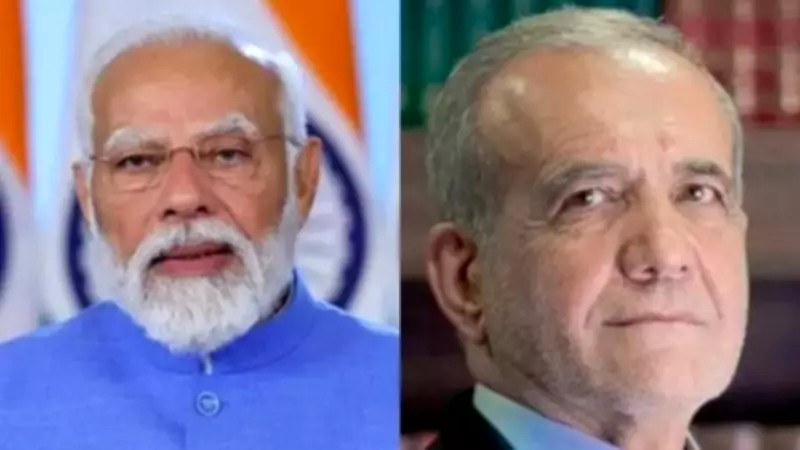
PM Modi Reiterates Need for Secure Shipping Lanes in Call with Iranian President
Prime Minister Narendra Modi engaged in a crucial telephone conversation with Iranian President Masoud Pezeshkian, marking their second discussion since the onset of military hostilities in the West Asia region. The dialogue occurred against a backdrop of escalating tensions that threaten to engulf critical energy infrastructure and raise concerns about a potential LPG crisis domestically.
Focus on Freedom of Navigation and Regional Stability
In a significant post on social media platform X, Prime Minister Modi underscored the paramount importance of safeguarding freedom of navigation and ensuring that vital shipping lanes remain open and secure. He explicitly condemned attacks on critical infrastructure "in the region," highlighting how such actions jeopardize regional stability and disrupt global supply chains.
While Modi has condemned violations of sovereignty and territorial integrity affecting Gulf Cooperation Council (GCC) countries—nations crucial for India's energy security and diaspora interests—he has notably refrained from directly condemning US-Israel attacks on Iran. However, reaffirming India's diplomatic stance, Modi conveyed to President Pezeshkian that India remains a friend to Iran.

Iran's Appeal to India's BRICS Leadership
According to an Iranian readout of the talks, President Pezeshkian urged India, in its capacity as the current chair of the BRICS grouping, to leverage its "independent role" to help halt the US-Israel hostilities against Iran. He emphasized that a prerequisite for ending the war is the immediate cessation of aggression by the United States and Israel, coupled with guarantees against future recurrences of such actions.
Parallel Diplomatic Engagements and Escalating Conflict
Separately, External Affairs Minister S. Jaishankar held discussions with his Iranian counterpart, Seyed Abbas Araghchi, addressing the conflict in West Asia and its broader implications for the region. The situation witnessed a dramatic escalation this week, with Israel launching an attack on Iran's South Pars gas field, prompting Tehran to retaliate with strikes on Qatar's Ras Laffan Industrial City, a global liquefied natural gas (LNG) hub.
Prime Minister Modi had previously communicated with Qatar's Amir, Tamim bin Hamad Al Thani, and leaders of other GCC nations, condemning attacks on energy infrastructure in the region. It is noteworthy that the Prime Minister has confined his condemnations to attacks "in the region" without specifying any particular country.
Regional Attacks and Diplomatic Gestures
Following the assault on its gas field, Iran targeted energy hubs in Saudi Arabia, Kuwait, and the United Arab Emirates, in addition to Qatar. Amidst these tensions, Prime Minister Modi extended Eid and Nowruz greetings to President Pezeshkian, expressing hope that the festive season would usher in peace, stability, and prosperity for West Asia. He also conveyed gratitude to Iran for ensuring the safety and security of Indian nationals residing in the country.






