Former FS Shringla Highlights Key Outcomes of PM Modi's Overseas Visits
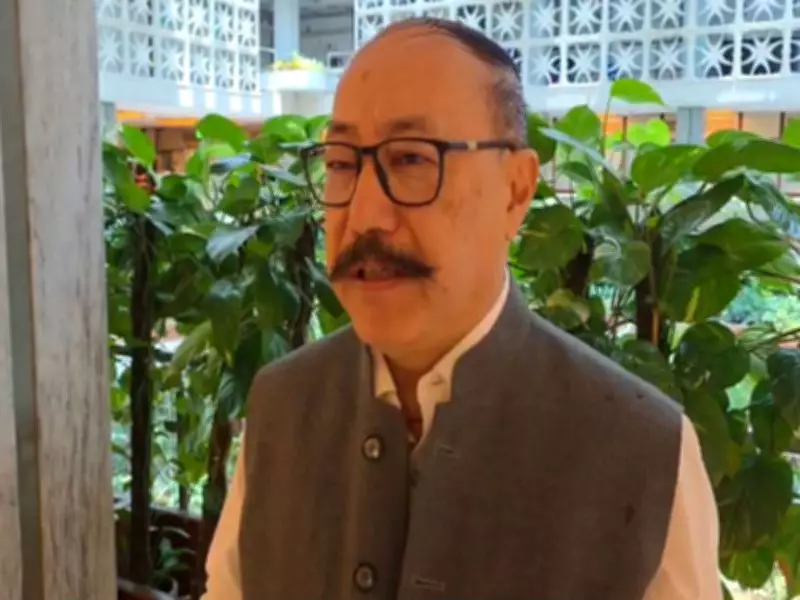
Rajya Sabha MP and former Foreign Secretary Harsh Vardhan Shringla on Friday stated that Prime Minister Narendra Modi's visits to Indonesia and Australia must be viewed in conjunction with Japanese Prime Minister Sanae Takaichi's recent visit to India, during which defence partnership was strengthened. Speaking to ANI, Shringla emphasized that maritime and defence security were the most important aspects of these diplomatic engagements.
Defence and Security Agreements Finalized with Three Key Partners
"When we look at Prime Minister Modi's tour of Indonesia and Australia, we should see it along with the Japanese Prime Minister's recent tour to India. In defense and security, we have connected with three very important partners at the highest levels and finalized a lot of agreements," Shringla said. He elaborated that the India-Japan maritime security and defense agreement was a critical component, and a similar strategy was adopted with Indonesia to boost bilateral cooperation in these areas. "I think we have taken a very important step forward," he added.
Joint Defense Agreement with Australia Enhances Naval Cooperation
Regarding the just-concluded Australia visit, Shringla noted that a joint defense agreement has been finalized, which will increase naval cooperation between the two nations. "Interoperability will increase, our training and joint exercises will increase, and there are many other areas where we both—Australia, Indonesia, and Japan—can move forward in the entire field of defense and security," he said.

Uranium Deal Operationalized After Years of Stagnation
Shringla addressed the uranium deal finalized during PM Modi's Australia visit, countering opposition claims that it was merely a "Modi breakthrough." He acknowledged that the India-Australia nuclear agreement was signed in 2011 but had seen no progress since. "Now we have seen that during Prime Minister Modi's Australia tour, it has been finalized that we can get uranium from Australia. The deal has been operationalized and the issues that were stuck in the middle, the deal-breakers, have all been removed," he said. He stressed that for the first time, uranium will start coming to India from Australia, a significant achievement given India's long-standing efforts. "Since 2014, relations with Australia have grown a lot in defense, security, natural resources, coal, and so on. Now, uranium has become a big component which is very important for our strategic security. We want our nuclear energy program to reach 100GW by 2047. Now it is 8GW, so we want to increase it exponentially. For this, we need uranium. We get it from some countries, but we face some difficulties in accessing it. So the deal with Australia is a very big deal, and it is because of Prime Minister Modi's tour and his good relations with Prime Minister Albanese that this deal is successful," he added.
Quad and Indo-Pacific Strategy Strengthened
From the Quad perspective, Shringla described the developments as positive, noting that Japan and Australia are partners in the grouping. "Recently, there was a meeting at the Foreign Minister level. With our two partners, Japan and Australia, our cooperation in defense, security, and other things is growing very fast. The US will certainly be included later, but with Japan and Australia, we are moving forward. If you add Indonesia to this, we have a big defense and security arc with these three, which is a very important part of the Eastern Indian Ocean region and our Indo-Pacific, Act East, and SAGAR policies. We have been very successful in our efforts to move forward in this," he said.
PM Modi Arrives in New Zealand
Earlier in the day, PM Modi landed in Auckland, where he was greeted by New Zealand Prime Minister Christopher Luxon with a warm embrace. The visit marks the next leg of his diplomatic tour.