Centre's PM SHRI Scheme Ignites Federalism Debate in West Bengal
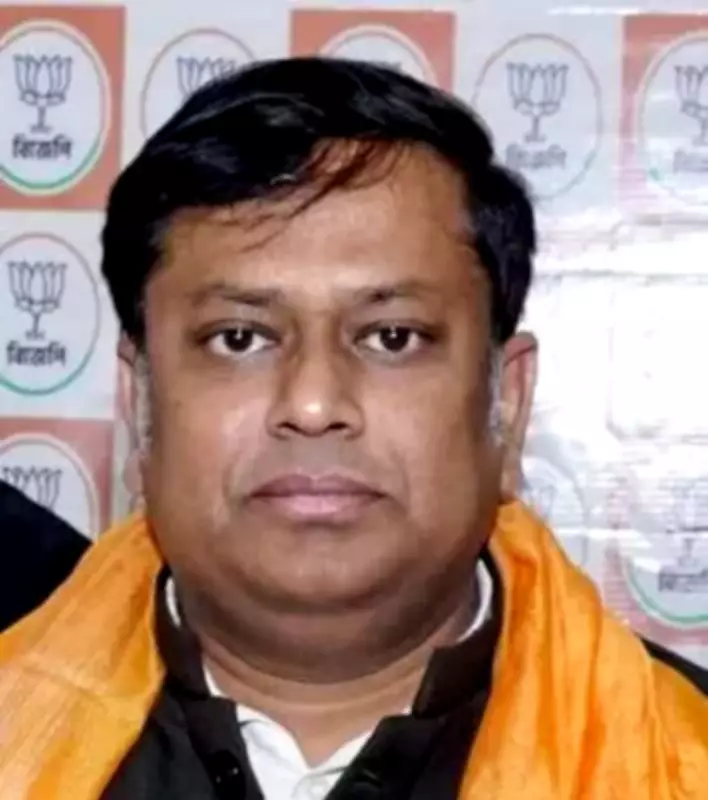
In a development that has intensified the ongoing tussle between the central government and West Bengal, Union Minister of State for Education Sukanta Majumdar declared on Tuesday that state-run schools must accept the Pradhan Mantri Schools for Rising India (PM SHRI) branding to receive central funds. This statement immediately drew a sharp retort from West Bengal's Education Minister Bratya Basu, who questioned why schemes co-funded by state governments should bear the Prime Minister's name, framing it as a broader issue of federal principles.
Union Minister's Non-Negotiable Stance on PM SHRI
Speaking at an event hosted by the Indian Institute of Technology in New Town, Kolkata, Majumdar was unequivocal in his position. He emphasized that the PM SHRI framework is non-negotiable for the disbursement of central funds to schools. "PM SHRI must be accepted. Only then will the funds be provided. It's all part of a package. You can't take the head and leave the hands — that's not acceptable," Majumdar asserted, using a vivid metaphor to underline the government's stance.
This declaration comes against the backdrop of a significant financial impasse. The central government currently owes West Bengal over Rs 1,000 crore in funds under the Samagra Shiksha Abhiyan, a comprehensive education scheme. The state administration has been resisting the adoption of the PM SHRI scheme in its present form, with the "PM" prefix emerging as a primary point of contention, alongside other structural concerns.

State Minister's Principled Objection and Federalism Concerns
Reacting swiftly to Majumdar's comments, Education Minister Bratya Basu characterized the state's opposition as "principled." He elaborated on the core issue, stating, "The Centre provides a portion of the grant, and the rest is provided by the state government. Revenue is collected from all over India. So, why should the projects be named only after the PM, and not include the state's name? This is our question, to which the Centre has not yet provided a satisfactory answer."
Basu escalated the argument by linking it to constitutional governance. "Our main objection is that constitutionally recognised federalism is being undermined at every step. I am eager to know what he has to say about this," he added, directly challenging the Union Minister to address these foundational concerns about state autonomy and recognition in jointly funded initiatives.
Centre's Counter and the Kerala Precedent
In his defense of the scheme, Majumdar pointed to the example of Kerala, which had initial reservations but eventually accepted the PM SHRI scheme in writing. He sought to downplay the naming controversy by clarifying, "We don't see any reason for objection to the name PM SHRI. The term PM does not refer to an individual." This argument suggests the central government views "PM" as an institutional title representing the office of the Prime Minister, rather than a personal attribution.
The debate underscores a deeper political and administrative rift. The PM SHRI scheme aims to upgrade and develop over 14,500 schools across India into exemplar institutions, with a focus on holistic education. However, its implementation has become entangled in the complex dynamics of centre-state relations, particularly in states like West Bengal where the ruling party is in opposition at the national level.
This standoff has practical implications for school infrastructure, teacher training, and student resources in West Bengal, potentially delaying crucial educational enhancements. Observers note that the resolution of this deadlock may require not just financial negotiations but also a diplomatic acknowledgment of the states' role and identity in national schemes, balancing central vision with regional partnership.