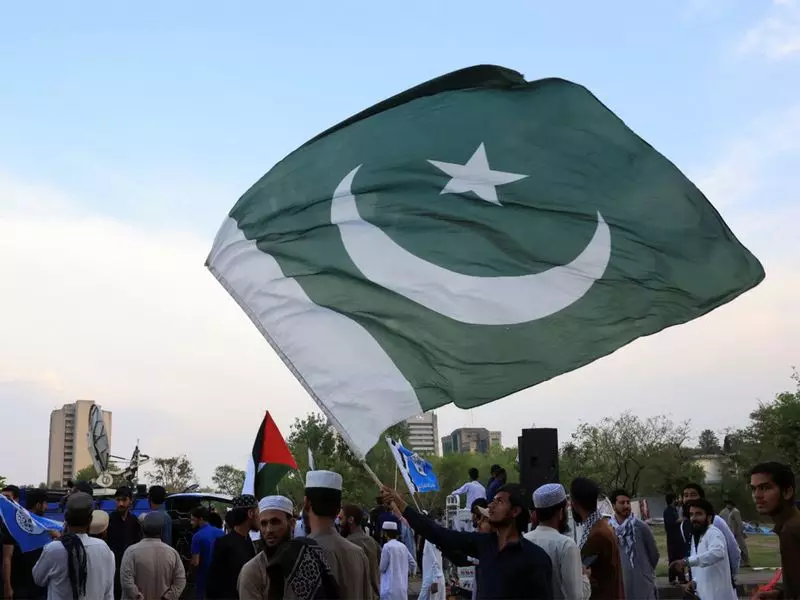
Pakistan's political landscape remains in a state of flux as the ruling Pakistan Muslim League-Nawaz (PML-N) has publicly called out the opposition Pakistan Tehreek-e-Insaf (PTI) for sending mixed signals regarding potential talks with the government. The development underscores the ongoing political tensions and the uncertain path toward reconciliation.
Contradictory Statements from PTI Create Confusion
The core of the issue lies in what the PML-N perceives as contradictory messages from the PTI camp. On one hand, certain PTI leaders have indicated a willingness to engage in dialogue. On the other hand, other prominent figures from the party have taken a hardline stance, seemingly rejecting the possibility of talks altogether.
This inconsistency has prompted the PML-N to demand clarity. Senior PML-N leader and Federal Minister for Planning, Development, and Special Initiatives, Ahsan Iqbal, directly addressed the confusion. He stated that the government is receiving conflicting signals from the PTI, which makes it difficult to proceed with any serious negotiation process.

The PML-N's position is clear: they are open to dialogue but require a sincere and unified approach from the opposition. Iqbal emphasized that the nation cannot afford a perpetual state of political deadlock, which hampers economic stability and governance.
The Call for Serious Engagement
Ahsan Iqbal framed the need for talks as a matter of national interest. He argued that political stability is a prerequisite for addressing Pakistan's pressing economic challenges and for attracting much-needed foreign investment. The current atmosphere of uncertainty, fueled by opposition's ambiguous stance, is seen as detrimental to these goals.
The minister pointedly questioned the PTI's strategy, asking whether their public statements were a genuine reflection of their intent or merely tactical posturing. This public airing of grievances highlights the deep mistrust that characterizes the current relationship between the major political forces.
For the PML-N-led coalition government, engaging in talks from a position of strength is crucial. They have consistently maintained that any dialogue must be conducted within the constitutional framework and with respect for state institutions.
Implications for Pakistan's Political Future
The back-and-forth over talks has several immediate implications:
- Continued Instability: The lack of a clear path to dialogue suggests that political tensions will persist, potentially leading to further confrontations.
- Economic Consequences: Investors and international financial institutions often view political cohesion as a key indicator of a country's risk profile. Prolonged deadlock could exacerbate economic difficulties.
- Public Sentiment: The Pakistani public, weary of constant political strife, may grow increasingly frustrated with both sides if they perceive a lack of seriousness in resolving differences.
The ball now appears to be in the PTI's court. The opposition party faces an internal challenge: to reconcile its various voices and present a coherent position on engagement with the government. Until it does so, the prospect of meaningful dialogue remains uncertain.
As the situation develops, the focus will be on whether the PTI leadership can consolidate its stance and whether both sides can identify common ground beyond partisan rivalry. The alternative—a continued state of political deadlock—is a scenario that many analysts believe Pakistan can ill afford at this critical juncture.