

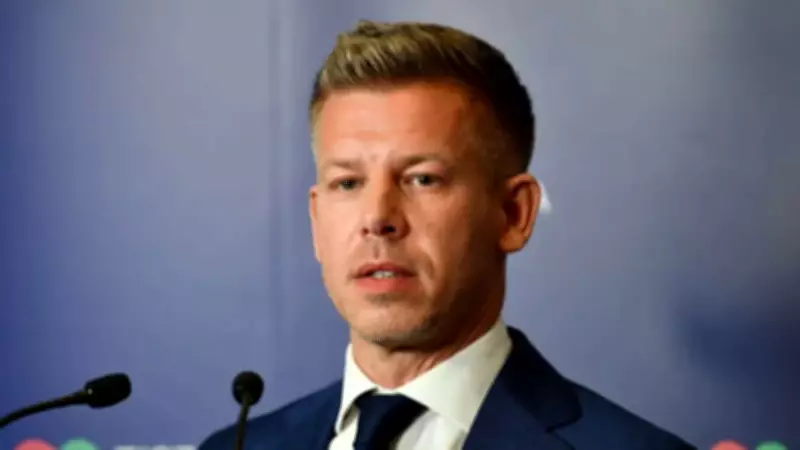
Hungary's Political Landscape Transformed as Péter Magyar Claims Historic Victory
In a stunning political reversal that has reshaped Central European dynamics, Péter Magyar, a former insider within Hungary's ruling establishment, is poised to become the nation's next prime minister after defeating long-time leader Viktor Orbán in the historic 2026 parliamentary election. This electoral outcome represents one of the most significant political shifts in Hungary since the collapse of communism, signaling a potential new direction for the country after more than a decade of nationalist governance under Orbán's Fidesz party.
From Political Insider to Leading Challenger
The 45-year-old Magyar, a lawyer and diplomat who leads the centre-right Tisza Party, was once closely aligned with Orbán's political machinery. His professional trajectory included various roles within state-owned companies and European Union-related work, positioning him as a trusted figure within the ruling elite. However, Magyar remained largely unknown to the general public until 2024, when he dramatically broke with the government following a major pardon scandal that rocked Hungarian politics.
His transformation from Orbán loyalist to leading opposition figure proved central to his political appeal. Magyar publicly accused the government of systemic corruption and abuse of power, launching a new political platform that rapidly gained momentum. Within months, he assumed leadership of the Tisza Party and positioned himself as the primary challenger to Orbán's 16-year rule, capitalizing on growing public discontent with the status quo.

Electoral Triumph and Policy Platform
The 2024 European Parliament elections provided the first significant indication of Magyar's rising political fortunes, with his party securing strong support that demonstrated growing public backing for his reform agenda. This momentum culminated in the decisive April 2026 parliamentary election victory, where Magyar led Tisza to a clear mandate for change amid high voter turnout.
Magyar's campaign centered on three core pillars: implementing comprehensive anti-corruption measures, restoring democratic institutions that critics argue were weakened under Orbán's tenure, and improving Hungary's relationship with the European Union. He has specifically called for reducing Hungary's dependence on Russian energy sources and rebuilding strategic relations with Western allies, while maintaining firm positions on migration control and national sovereignty issues.
Conservative Reformer with Complex Background
Despite positioning himself as a reformer committed to democratic renewal, Magyar maintains conservative political orientations. He describes himself as pro-European but critically engaged with EU institutions, suggesting a more nuanced approach to European integration than his predecessor. His personal background includes being born in Budapest in 1981 into a politically connected family, studying law, and working across both public and private sectors.
Magyar's previous marriage to former justice minister Judit Varga, a key figure in Orbán's government, adds another layer to his complex political journey from establishment insider to opposition leader. This personal connection to the previous administration has both informed his understanding of government operations and provided ammunition for critics questioning his transformation.
Challenges Ahead for New Leadership
As Magyar prepares to assume leadership, he faces substantial challenges in delivering on his campaign promises and reshaping Hungary's political direction. The transition from opposition critic to governing authority will test his ability to implement anti-corruption reforms while managing a diverse coalition of supporters. His success or failure in improving EU relations and reducing Russian energy dependence will have significant implications for Hungary's international positioning and economic stability.

The historic nature of this political transition cannot be overstated, marking not just a change in leadership but potentially a fundamental reorientation of Hungarian politics. As Magyar moves from challenger to prime minister, his administration will be closely watched both domestically and internationally for signs of whether his reform agenda can translate from campaign rhetoric to effective governance in the post-Orbán era.





