

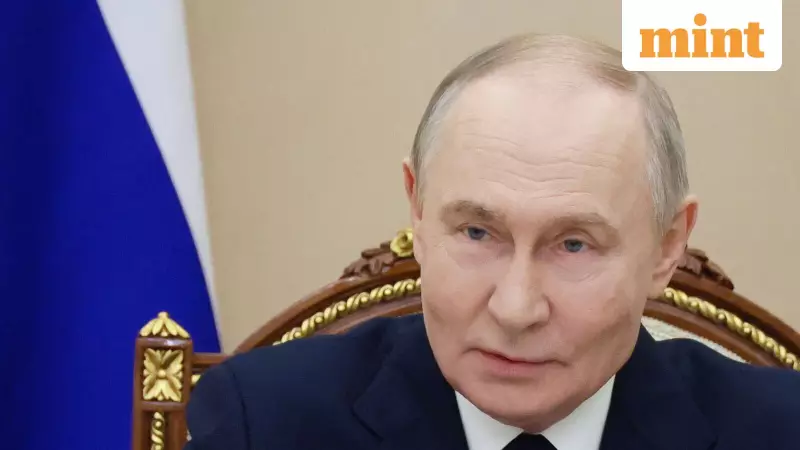
In a significant development that could impact the trajectory of the Ukraine conflict, Russian President Vladimir Putin informed his US counterpart Donald Trump on Monday that Moscow would be forced to reassess its stance in ongoing peace negotiations. This decision, according to the Kremlin, comes in response to what Russia describes as a Ukrainian drone attack targeting a Russian presidential residence.
The Alleged Attack and Diplomatic Fallout
The Kremlin claimed that 91 drones were aimed at President Putin's residence in northern Russia's Novgorod region. Kremlin foreign policy aide Yuri Ushakov, in a conference call with reporters, stated that President Trump was taken aback when Putin relayed this information during their phone conversation on December 28, 2025. Ushakov emphasized that Russia's position would now be reviewed regarding previous agreements and emerging interchanges, stating this was made "very clearly."
Ukraine has vehemently rejected the accusation. President Volodymyr Zelensky dismissed it as a complete fabrication, asserting that the claim is aimed at justifying further Russian attacks on Ukrainian cities, including Kyiv, and masking Moscow's refusal to take genuine steps to end the war. Ukrainian officials have pointed out that Russia has yet to provide any evidence for the alleged attack.

Peace Talks in a Precarious State
The call between the two leaders followed closely on the heels of President Trump's meeting with President Zelensky at the Mar-a-Lago estate in Florida. While both leaders expressed optimism after that meeting—with Zelensky stating the peace plan was "90% agreed" and Trump hailing "a lot of progress"—no clear breakthrough was announced. Trump noted a deal was getting closer but could take weeks to finalize without a set timeline.
According to Ushakov, the American side, during their negotiations with Ukraine, has been aggressively pushing for Kyiv to take real steps towards a final settlement rather than hiding behind demands for a temporary ceasefire. However, Russia remains concerned that Ukraine's proposals to the US might still be interpreted too broadly by Kyiv itself.
Road Ahead and International Coordination
The diplomatic landscape remains complex. Zelensky indicated that Ukraine is seeking a meeting with its European partners and President Trump in January 2026, to be followed by a separate engagement with Russian officials. In a related development, French President Emmanuel Macron announced that the Coalition of the Willing group will convene in early January to discuss continued support for Ukraine.
Meanwhile, the substance of the peace plan is still being negotiated. Ukrainian officials have spent recent weeks revising a draft, initially a 28-point plan proposed by the US that was seen as overly favorable to Russia. The latest version, as reported by Bloomberg, has been condensed to 20 points. Moscow has already warned that this revised draft contains elements it will not accept, particularly provisions related to the size of Ukraine's post-war military.
The alleged drone strike and Russia's consequent threat to reassess its negotiating position introduce a new layer of tension, potentially derailing the fragile diplomatic progress achieved in recent weeks. The international community now watches to see if this incident becomes a stumbling block or a passing storm in the arduous journey toward peace.






