

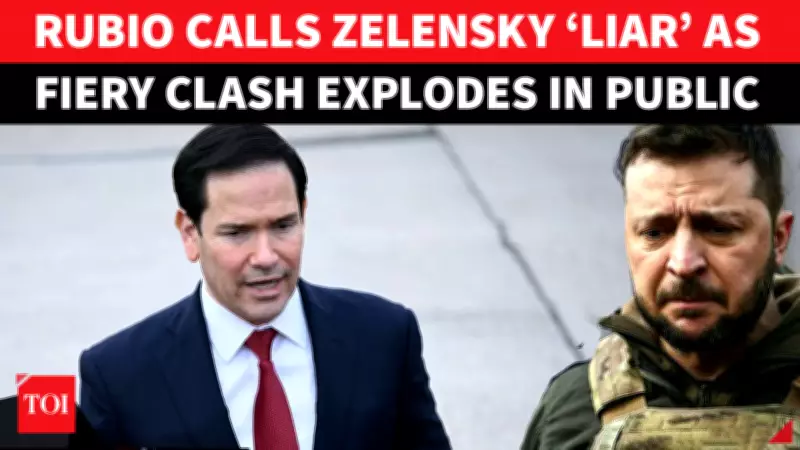
Rubio 'Humiliates' Zelensky Over Donbas Claim, Shuts Down 'Fake News' of US Demands
A sharp diplomatic clash has erupted between the United States and Ukraine, with US Secretary of State Marco Rubio publicly labeling Ukrainian President Volodymyr Zelensky's claims as "a lie." This explosive exchange occurred on March 28, 2026, exposing growing tensions between Washington and Kyiv amid the ongoing war in Ukraine.
Rubio's Forceful Denial of US Pressure
Rubio vehemently denied allegations that the United States pressured Ukraine to give up the Donbas region, a contested area in eastern Ukraine. In a statement that has sent shockwaves through international diplomatic circles, Rubio insisted that such reports are "fake news" and do not reflect US policy. He emphasized that the US position has consistently focused on supporting Ukraine's sovereignty and territorial integrity.
The Secretary of State clarified: "Security guarantees for Ukraine depend on ending this conflict through diplomatic means, not on territorial concessions. The idea that we would demand Ukraine surrender Donbas is categorically false and undermines our shared goals."

Zelensky's Controversial Assertion and the Fallout
President Zelensky had previously suggested in a speech that the US was pushing for concessions in Donbas as part of broader peace negotiations. This claim, which Rubio now calls "a lie," has sparked intense debate and raised questions about the transparency and coordination between the two allied nations.
The public rebuke from Rubio is seen as a significant humiliation for Zelensky, coming at a time when Ukraine relies heavily on US military and economic aid. Analysts note that this incident could strain the bilateral relationship, potentially affecting future cooperation and strategy in the war effort.
Implications for US-Ukraine Coordination
As tensions mount, there are growing concerns over the future of US-Ukraine coordination. Key issues include:
- The alignment of military and diplomatic strategies in the ongoing conflict.
- The reliability of intelligence and information sharing between the two governments.
- The impact on international support for Ukraine, as other allies may reassess their positions based on this discord.
Rubio's comments underscore a hardening US stance, with a clear message that any peace settlement must prioritize Ukraine's sovereignty without forced territorial losses. This stance is consistent with long-standing US policy but marks a more confrontational tone in public discourse.
Broader Context of the War and Diplomatic Strains
This clash occurs against the backdrop of a protracted war that has drawn in global powers and reshaped international relations. The Donbas region, in particular, has been a flashpoint since 2014, with ongoing fighting between Ukrainian forces and Russian-backed separatists.
The public disagreement between Rubio and Zelensky highlights the delicate balance in US-Ukraine relations, where strategic interests sometimes clash with political narratives. It also reflects the challenges of maintaining unity among allies in a complex and evolving conflict.
As the situation develops, observers are watching closely to see how this diplomatic rift will affect peace talks, aid packages, and the overall trajectory of the war. The incident serves as a stark reminder of the high stakes and fragile alliances in modern geopolitics.






