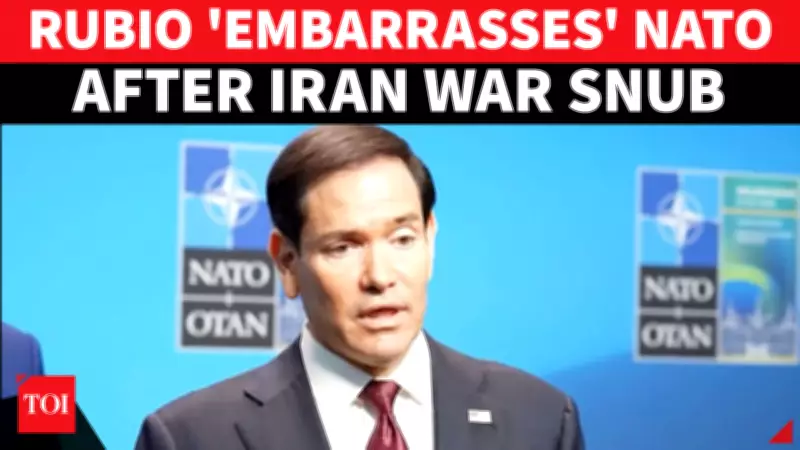
US Secretary of State Marco Rubio has raised fresh questions over NATO's value to Washington, warning that the alliance 'has to be valuable to the United States' as the Trump administration reassesses America's military posture in Europe. Rubio's remarks came after reports that some NATO allies denied US forces access to bases for potential operations linked to Iran.
Rubio's Remarks in Sweden
Speaking in Sweden after talks with NATO foreign ministers, Rubio suggested Washington could reduce troop deployments in Europe while shifting focus toward emerging threats in the Middle East and Indo-Pacific. He urged NATO allies to prepare contingency plans for the Strait of Hormuz crisis if Iran refuses to reopen the crucial global shipping route.
NATO's Response and Implications
The comments have sparked debate about the future of the alliance. Rubio emphasized that NATO must demonstrate its relevance to US national security interests. The denial of bases for potential Iran operations has highlighted growing tensions within the alliance over strategic priorities.

Analysts say Rubio's stance reflects a broader shift in US foreign policy under President Trump, who has long criticized NATO allies for not spending enough on defense. The US is expected to continue pushing for greater burden-sharing among member states.
Strategic Reassessment
The Trump administration is reportedly conducting a comprehensive review of US military deployments worldwide. This includes potential reductions in Europe to free up resources for the Middle East and Asia. Rubio's remarks signal that the US expects NATO to adapt to new geopolitical realities, particularly regarding Iran and China.
Meanwhile, the Strait of Hormuz remains a flashpoint. Iran has threatened to block the waterway, which handles about 20% of global oil shipments. Rubio called on NATO to develop contingency plans to ensure freedom of navigation, even as some allies hesitate to commit to military action.