

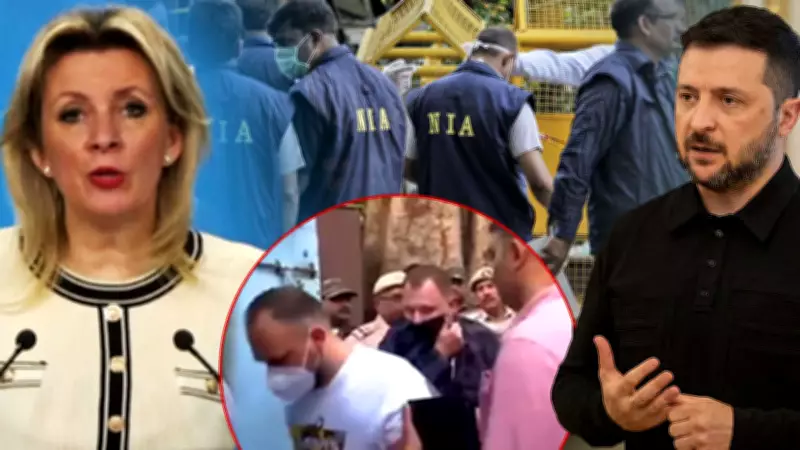
Russia Condemns Ukraine as 'Core Exporter of Instability' Following NIA Arrests in India
Russia has issued a sharp rebuke against Ukraine in response to India's recent arrest of six Ukrainian citizens and one American national by the National Investigation Agency (NIA). The individuals are accused of having connections with banned insurgent groups, sparking a diplomatic flare-up between Moscow and Kyiv.
Details of the Arrests and Allegations
According to statements from Russian Foreign Ministry spokesperson Maria Zakharova, the detained individuals allegedly crossed from India's northeastern state of Mizoram into Myanmar. There, they purportedly linked up with local armed factions, supplied European Union-manufactured drones, and provided training in drone assembly, repair, and electronic warfare techniques to militants.
Zakharova criticized the Ukrainian government for attempting to conceal the incident and for remaining silent on what she described as clear violations of India's counter-terrorism legislation. She asserted that Kyiv has become a "core exporter of instability," deeply involved in global arms black markets and fueling regional conflicts across the world.

India's Official Response and Detainee Status
The Ministry of External Affairs in India has confirmed that consular access requests have been received for the detainees. All seven individuals, including US citizen Matthew Van Dyke, have been remanded to 11-day custody under the NIA for further investigation into their alleged activities and networks.
This development underscores the complex geopolitical tensions surrounding counter-terrorism efforts in South Asia. It highlights the intersecting interests of major powers like Russia, the United States, and India, particularly in the context of ongoing conflicts and security challenges in the region.
The arrest of foreign nationals on terrorism charges in India is a rare occurrence that has drawn significant international attention. It raises questions about the transnational nature of militant networks and the role of state actors in either combating or, as alleged by Russia, facilitating such activities.
As the investigation proceeds, the case is likely to have broader implications for diplomatic relations between India, Ukraine, Russia, and the United States. It also emphasizes India's proactive stance in addressing security threats within its borders, regardless of the nationalities involved.






