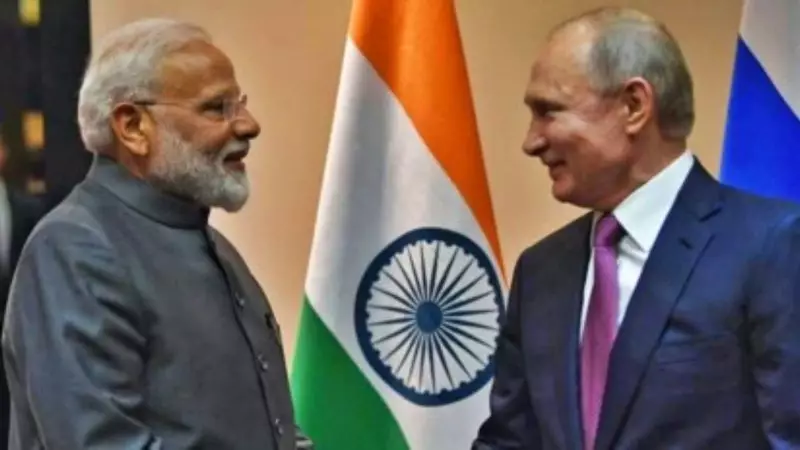
Ahead of a highly anticipated visit by Russian President Vladimir Putin, Moscow has publicly commended India for its "very friendly" stance on the Ukraine conflict and praised Prime Minister Narendra Modi's diplomatic approach. This significant endorsement highlights the enduring strength of the strategic partnership between the two nations, even as global geopolitical fault lines deepen.
Moscow's Commendation for New Delhi's Position
In a notable statement, Russian Foreign Ministry Spokeswoman Maria Zakharova explicitly lauded India's posture. She described India's position on the Ukraine situation as "very balanced and very friendly," directly acknowledging the diplomatic path charted by the Indian leadership. This praise underscores Russia's appreciation for India's independent foreign policy, which has consistently called for dialogue and diplomacy to resolve the ongoing crisis.
Zakharova went further to single out Prime Minister Narendra Modi for his role. She emphasized that Russia values the "very thoughtful, balanced position of the Indian leadership, primarily Prime Minister Narendra Modi," regarding the Ukraine issue. This specific mention reinforces the personal rapport between the two leaders and signals Moscow's comfort with New Delhi's nuanced diplomacy on the world stage.

Preparations for the Putin-Modi Summit
The public praise comes amidst active preparations for President Putin's visit to India. While an official date for the visit has not been formally announced, it is widely anticipated to occur in the latter half of 2024. This would mark Putin's first trip to India since the commencement of the Russia-Ukraine war in February 2022, adding considerable weight to the upcoming discussions.
High-level diplomatic engagements are paving the way for the summit. Russian Foreign Minister Sergey Lavrov and Indian External Affairs Minister S. Jaishankar recently held talks on the sidelines of the Shanghai Cooperation Organisation (SCO) meeting in Astana. These discussions are crucial for aligning agendas and ensuring the leaders' meeting yields substantive outcomes across a broad spectrum of bilateral issues.
Navigating a Complex Global Landscape
The forthcoming visit and the surrounding diplomacy occur within a complex international context. India has maintained a position of strategic autonomy, increasing its purchases of Russian oil while simultaneously advocating for a peaceful resolution in Ukraine. This balanced approach has allowed India to safeguard its national interests and energy security without fully aligning with any single bloc.
Key areas of discussion during President Putin's visit are expected to include:
- Trade and Economic Ties: Addressing the imbalance caused by surging energy imports and finding ways to increase Indian exports to Russia.
- Defense Cooperation: Navigating ongoing military contracts and joint projects amidst Western pressure and sanctions.
- Logistical Challenges: Solving payment mechanism issues and exploring alternative trade routes like the International North-South Transport Corridor (INSTC).
- Multilateral Coordination: Discussing collaboration within forums like BRICS and the SCO, where both nations play pivotal roles.
Russia's explicit praise serves multiple purposes. It validates India's independent foreign policy, strengthens the bilateral bond ahead of critical negotiations, and subtly underscores the contrast between India's stance and the outright condemnation from Western capitals. For India, the commendation is a diplomatic asset, affirming its capacity to engage constructively with all sides in a polarized world.
As the groundwork is laid for one of the most watched diplomatic events of the year, the reaffirmation of mutual respect and understanding between Russia and India sets a positive tone. The challenge for both leaders will be to translate this goodwill into concrete agreements that advance their national interests and contribute to global stability, even as the Ukraine conflict continues to cast a long shadow over international relations.