Sri Lankan Opposition Leader Advocates for Deeper Economic Integration with India
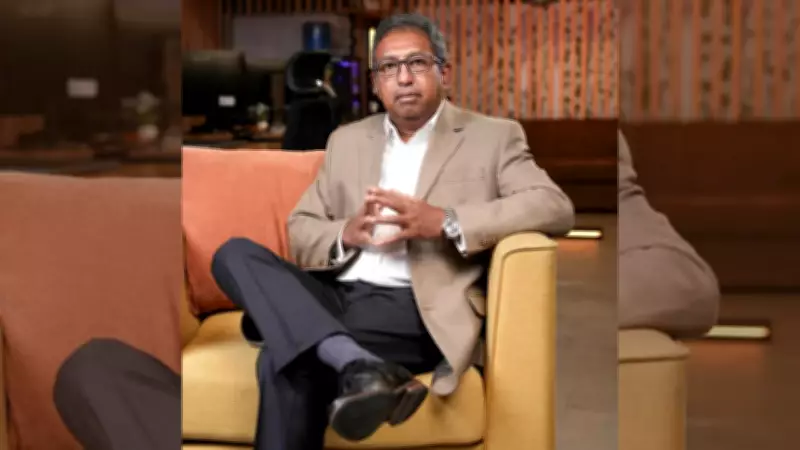
In a recent interview with Times of India, Harsha de Silva, the influential Chair of Sri Lanka's Parliament Committee on Public Finance, voiced his disappointment over the delayed signing of the proposed Economic and Technology Cooperation Agreement (ETCA) with India. He underscored the critical need for stronger economic integration between the two nations, particularly in light of global uncertainties.
Analogy of Growth: India as the Economic Engine
De Silva drew a vivid analogy to explain the potential benefits of closer ties with India. "When we were kids and we'd ride the bicycle, a slight hill... it's tough to pedal. And then there comes a small truck. You hold on to the truck and, you know, without much effort, you're taken up the hill, right?" he said. "To me, that's the analogy here. India is the center of growth in the next two decades."
He highlighted India's expanding economic influence, noting growth beyond the southern states to regions like Uttar Pradesh. "Integration with the economic engine is not a question that has a yes or no answer. The answer has to be why are we so late in getting there," de Silva emphasized. His vision extends beyond mere trade, focusing on collaborative production for global markets. "My point is, it's not about us producing stuff and selling in India. My thing is that together with India, we produce stuff to sell around the world."

Frustration Over ETCA Delays and Political Hurdles
De Silva expressed bewilderment at the failure to sign ETCA, describing it as "almost unreal." He attributed the delays to historical protectionist lobbies in Sri Lanka that have long opposed closer relations with India. "Historically, these protectionist lobbies have been aligned with political parties. They have protested against India for a long period of time," he explained.
He pointed out a recent shift, referencing the JVP party's engagement with Indian External Affairs Minister S. Jaishankar, but remained skeptical of this transformation. "I can't believe what I'm seeing... the rhetoric, actually they believed in it for a long period," de Silva noted, alluding to past anti-India sentiments that he believes hindered Sri Lanka's progress.
Addressing common fears about ETCA, de Silva clarified that the agreement includes restrictions on service trade to prevent an influx of foreign professionals. "The movement of natural persons—say doctors, or architects, or engineers, or bankers, etc.—by themselves is restricted. You can't do it," he stated, urging a move beyond misleading narratives.
He also expressed disappointment that Sri Lankan leaders have not prioritized ETCA in recent diplomatic visits to Delhi. "I am actually disappointed that the President in his two visits to Delhi, and the PM in her one visit to Delhi, have not spoken a word about ETCA," he said.
Balancing Relations with China and India
When questioned about Sri Lanka's ties with China, a major creditor, de Silva stressed the importance of not compromising India's security interests. He reflected on the ideological shifts within the JVP, now led by President Anura Kumara Dissanayake, but remained cautious. "He's transformed... can people do that? Because I can't," de Silva mused, referencing the party's historical pro-China stance and its past impact on Sri Lanka.
"If that had happened earlier, we would be in a much better place now," he added, highlighting the costs of delayed integration. He concluded, "You can have friends and you can even have best friends, but India is our neighbor, right? It's our only neighbor."
Views on Indian Investment and Energy Sector
De Silva supported Indian investment in Sri Lanka's energy sector, including from groups like Adani, but emphasized the need for competitive bidding. "If we are letting people use—or if government is procuring anything—it has to be competitively bid upon. That's the basic," he asserted.

Drawing from his experience in Bhutan and Nepal, he highlighted the potential for energy collaboration. "Indian investment is crucial in Sri Lanka's energy sector... think about it as a financial transaction," he said, advocating for pragmatic approaches over politics.
Response to Regional Incidents
Regarding a recent incident involving an Iranian warship in Sri Lanka's Exclusive Economic Zone, de Silva described it as a humanitarian response. "We just got a distress call and we responded to it as any right-thinking country would do. There is no politics in this," he stated, underscoring Sri Lanka's commitment to aiding those in distress regardless of political affiliations.