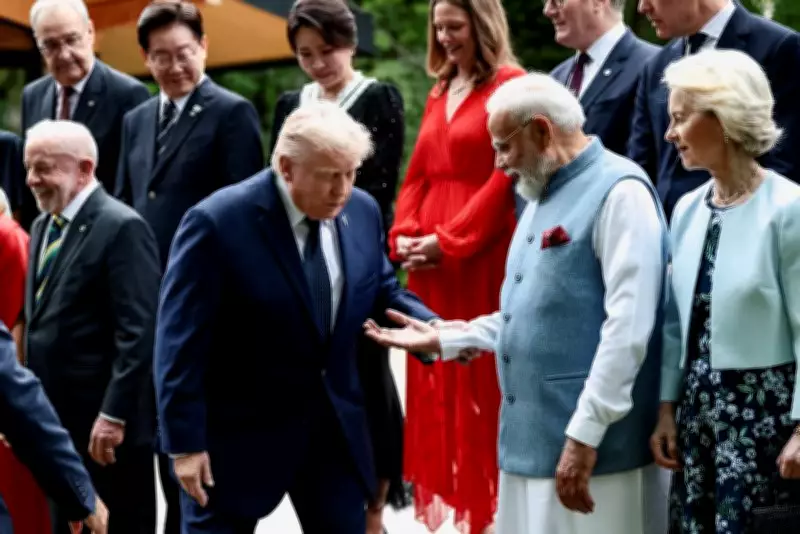
The 52nd Group of Seven (G7) summit in Évian, France, has significant implications for the world and India. The event occurs as global dynamics shift under the Trump administration, with India-US relations experiencing turbulence. Prime Minister Narendra Modi’s first meeting with US President Donald Trump since February 2025 featured a firm handshake instead of a hug, signaling a change in tone.
India’s Role at G7
India was an outreach partner of the G7 from 2003 to 2009 and was reinvited by France in 2019, becoming a consistent invitee. This year, PM Modi was given a prominent position next to Trump and host President Emmanuel Macron at the outreach meeting.
G7 Agenda and Challenges
The G7 agenda includes geopolitical conflicts, economic imbalances, supply chain disruptions, energy transition, climate change, global health, trade, stability, energy issues, AI, and cybersecurity. Despite political disunity under Trump, the summit remains a valuable forum for world leaders, though China and Russia are absent.

India-US Relations: A Difficult Period
The focus has been on the Trump-Modi meeting after 16 months of strained ties. Relations soured over Trump’s claims of brokering a ceasefire between India and Pakistan in May 2025, followed by tariffs on India for buying Russian oil, making India one of the most tariffed countries. Modi avoided direct meetings with Trump, declining invitations to Washington, the ASEAN summit, and the Gaza Peace Summit.
Key Meeting and Speeches
Tuesday’s brief encounter was followed by Modi’s outreach speech, with Trump listening attentively. A more substantive bilateral meeting occurred Wednesday evening. Modi highlighted global interconnections in energy, food, health, cyber, and economic security. He emphasized that the Global South seeks equal partnerships based on trust, not donor-recipient dynamics, and called for lasting solutions to regional conflicts through dialogue and diplomacy.
Maritime Trade and Seafarer Safety
Modi’s main message to Trump focused on disruptions to maritime trade through the Strait of Hormuz, impacting the global economy. He referenced the loss of Indian lives and stressed collective responsibility for seafarer protection. Modi underscored that “mutual trust is the most important strategic asset today.” Trump may not have fully grasped that trust relates to him, as many Indians blame US actions for the deaths of three seafarers.
Trade Deal Negotiations
Modi’s key task was to secure a clear signal from Trump on finalizing the first tranche of their trade deal. On June 23-24, US negotiators led by USTR Jamieson Greer will meet Indian counterparts led by Commerce Minister Piyush Goyal to resolve issues on tariffs for agriculture, dairy, and increased US energy exports. This first tranche will set the stage for a Bilateral Trade Agreement. India also aims to push back against Section 301 proceedings that could add 12.5% tariff on Indian goods.
Strategic Reset and Future Outlook
The G7 summit and high-level meetings come as India-US relations need a reset. Past tensions from Trump’s ceasefire claims, tariff escalation, and seafarer deaths will not heal easily, but both sides have structural incentives to move forward. Washington needs a credible democratic partner in the Indo-Pacific to manage rivalry with China, while New Delhi needs US technology, capital, and strategic cover. The Modi-Trump bilateral was more about utility than warmth—a transactional recalibration by leaders who recognize converging interests.
Challenges Ahead
The immediate test is whether the Évian encounter provides political momentum for trade negotiations. India enters with a structural disadvantage: the clock is running, and US negotiators have shown little flexibility on agriculture, dairy, or Section 301. Additionally, USINDOPACOM will revert to its former name, USPACOM, a change originally made during Trump’s first term to signal Indo-Pacific strategy.
Beyond the trade deal, India’s ability to position itself as an indispensable partner in AI governance, critical minerals supply chains, and Indo-Pacific security will shape future relations, but on a more transactional and difficult plane.