

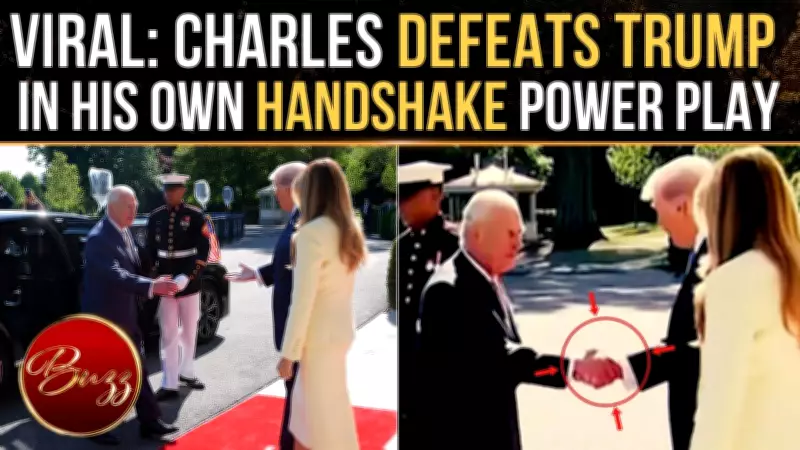
A tense handshake between Donald Trump and King Charles III has gone viral, with many claiming the British monarch refused to yield to the U.S. President's signature power move. The moment unfolded during a high-stakes White House meeting amid rising tensions between the U.S. and U.K. over Iran, trade tariffs, and foreign policy.
The Handshake That Sparked Debate
The encounter, captured by cameras, showed Trump extending his hand in his characteristic assertive manner, often used to assert dominance in meetings. However, King Charles III appeared to hold his ground, maintaining a firm grip and not yielding to the pull, which Trump has been known to employ. Social media erupted with reactions, with many interpreting the monarch's response as a subtle diplomatic rebuff.
Context of Rising US-UK Tensions
The handshake occurred against a backdrop of strained relations between the two allies. Disagreements over Iran nuclear deal negotiations, trade tariff disputes, and diverging foreign policy approaches have created friction. British Prime Minister Keir Starmer has been navigating these challenges, seeking to balance the traditional alliance with the need to assert British interests.

Analysts suggest that the symbolic exchange reflects a shifting diplomatic dynamic. While the handshake itself may seem trivial, it encapsulates the current state of US-UK relations, where even gestures carry weight. The incident has been widely shared on social media, with commentators noting that King Charles's demeanor signaled a refusal to be overshadowed.
Broader Implications
This moment is not just a viral sensation but a snapshot of evolving diplomatic protocols. As the U.S. and U.K. navigate complex global issues, such interactions highlight the personal dimensions of statecraft. The handshake has been compared to past iconic diplomatic moments, where body language spoke volumes about underlying tensions.
For now, the image of King Charles standing firm against Trump's power move will likely remain a talking point in discussions about transatlantic relations. Whether it leads to any tangible change in diplomacy remains to be seen, but it has certainly captured the public's imagination.






