Trump Announces Iran War Conclusion Within Weeks, Pushes US Oil Sales Amid Global Fuel Crisis
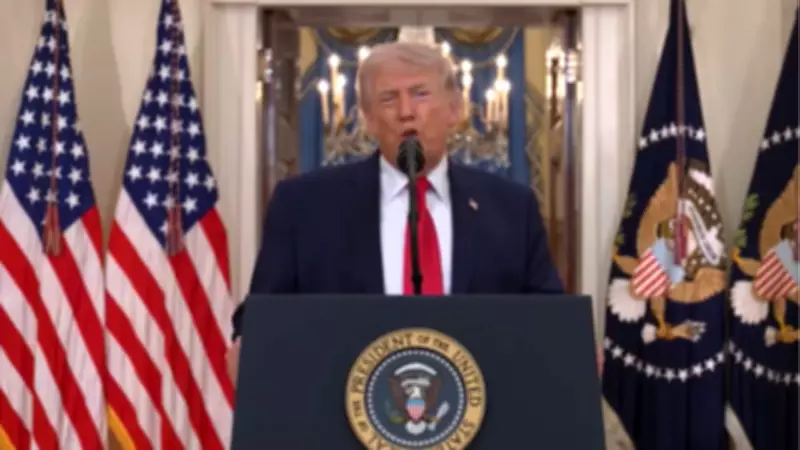
In a significant address on Thursday, US President Donald Trump delivered key updates on the ongoing conflict with Iran, declaring that Operation Epic Fury is "nearing completion" and will conclude very soon. Facing a war-weary public and declining approval ratings, Trump restated his plan to end the hostilities within the next two to three weeks, aiming to ease widespread concern among Americans who largely oppose the war and are frustrated by rising fuel prices due to global supply disruptions.
Timeline and Strategy for War's End
Trump and his advisers have provided varying explanations and timelines for the war, now in its fifth week, but the president reiterated his claim that the conflict will end shortly. He emphasized that US forces will continue to strike Iran over the next two to three weeks, stating, "Over the next two to three weeks, we are going to bring them back to the Stone Ages, where they belong." Convincing voters that the war is limited and approaching its conclusion could help alleviate public anxiety, as most Americans oppose the engagement and many are impacted by the economic fallout.
Addressing the Global Oil Crisis
With Iran blocking the Strait of Hormuz, especially for countries supporting aggressor nations, Trump suggested that nations facing an oil crisis should buy fuel from the United States or "go to the Strait and take it." He linked the recent rise in gasoline prices in America to Iranian actions, saying, "This short-term increase has been entirely the result of the Iranian regime launching deranged terror attacks against commercial oil tankers and neighboring countries that have nothing to do with the conflict." Trump asserted that this demonstrates Iran cannot be trusted with nuclear weapons, warning of potential decades of extortion, economic pain, and instability.

Highlighting America's economic preparedness, Trump added, "The United States has never been better prepared economically to confront this threat. You all know that we built the strongest economy in history... America has plenty of gas. We have so much gas under our feet," referencing the "Drill, Baby, Drill" program. He cited record-setting investments and stock market highs as positioning the US to eliminate what he called "a cancer that has long simmered," referring to a nuclear Iran.
Update on Operation Epic Fury
Trump provided an update on the progress of US forces in Iran, describing Operation Epic Fury as crucial for the safety of America and global security. He reiterated his long-standing commitment to prevent Iran from acquiring a nuclear weapon, dating back to his 2015 presidential campaign announcement. Trump detailed the regime's history of attacks, including the Beirut Marine barracks bombing, the USS Cole attack, roadside bombings, and the October 7 atrocities in Israel.
He stated, "Tonight, I want to provide an update on the tremendous progress our warriors have made in Iran and discuss why Operation Epic Fury is necessary for the safety of America and the security of the free world. This regime has been chanting 'Death to America, Death to Israel' for 47 years." Trump emphasized Iran's involvement in various heinous acts, underscoring the threat it poses to international stability.
Key Takeaways from the Address
- The war with Iran is set to end in the next two to three weeks, with Operation Epic Fury nearing completion.
- Trump urged nations affected by the oil crisis to purchase fuel from the United States or seize it from the Strait of Hormuz, blocked by Iran.
- He linked rising fuel prices to Iranian attacks and warned against trusting Iran with nuclear weapons.
- Trump highlighted America's economic strength and preparedness to confront the threat, citing investments and energy resources.
- Operation Epic Fury was described as essential for US and global security, with Trump detailing Iran's history of aggression.
This address comes amid tensions, with Iran dismissing Trump's claims as "FAKE" and asserting that the Strait of Hormuz will not reopen easily. The situation continues to evolve, impacting global diplomacy and energy markets.