Trump Launches Fresh Attack on Canada Over Defense and China Relations
Former US President Donald Trump has escalated his criticism of Canada, accusing the nation of opposing his proposed "Golden Dome" missile defense system over Greenland while simultaneously strengthening economic partnerships with China. In a recent post on his Truth Social platform, Trump asserted that Canada is against the construction of the Golden Dome, which he claims would inherently protect Canadian territory.
Trump's Accusations and Canadian Response
Trump stated, "Canada is against The Golden Dome being built over Greenland, even though The Golden Dome would protect Canada." He further criticized Canada's economic decisions, adding, "Instead, they voted in favor of doing business with China, who will 'eat them up' within the first year!"
In response, Canadian Ambassador to the US Kirsten Hillman defended her country's defense investments, telling CBS News, "Canada is investing over $80 billion over the next 5 years in our defense systems." She emphasized collaborative approaches, noting, "When we have talked to the President about protecting our hemisphere, we have talked about ways in which our different capabilities can work together so that we have eyes on the region."

Context of Rising Bilateral Tensions
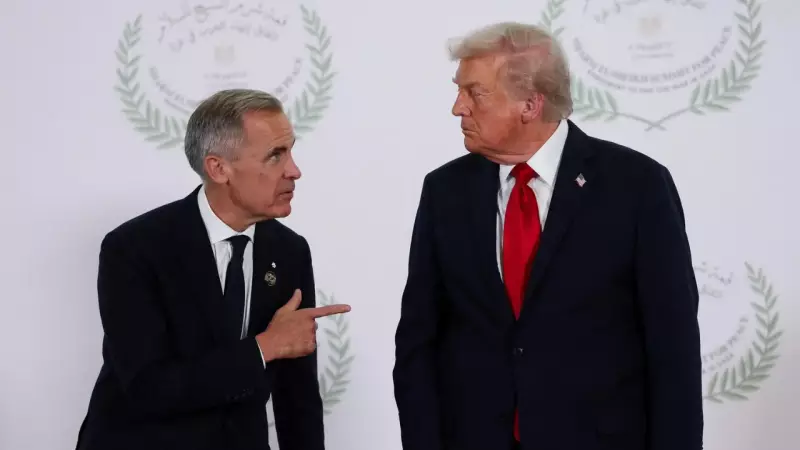
These comments mark the latest in a series of personal criticisms from Trump toward America's northern neighbor, intertwining defense policy, trade competition, and longstanding bilateral issues. The remarks follow Canadian Prime Minister Mark Carney's visit to Beijing, aimed at reviving economic engagement with China, Canada's second-largest trading partner after the United States.
The visit resulted in an agreement to reduce tariffs on certain Canadian agricultural products and establish quotas for Chinese electric vehicles entering Canada. This deal could also pave the way for increased Chinese investments in Canada. As the first Canadian leader to visit China in a decade, discussions between Carney and Chinese Premier Xi Jinping touched on a "new world order," with Xi hailing a "turnaround" in their relationship.
Davos Address and Sovereignty Debate
Speaking at the World Economic Forum in Davos, Trump reiterated that the Golden Dome missile defense system would naturally extend protection to Canada. "We're building a Golden Dome that's going to, just by its very nature, be defending Canada," he told attendees. Trump further asserted, "Canada lives because of the United States. Remember that, Mark, the next time you make your statements," directly addressing Prime Minister Carney.
Carney responded firmly upon returning from Davos, rejecting Trump's claims. "Canada doesn't live because of the United States. Canada thrives because we are Canadian," he stated. Emphasizing national sovereignty, Carney added, "We are masters in our home. This is our own country. It's our future. The choice is up to us." At Davos, Carney had warned against coercion by major powers toward smaller nations, without explicitly naming Trump, and called for "middle-powers" to unite against a fragmenting global system.
Key Contentions and Golden Dome Details
Trump has repeatedly floated the idea of Canada becoming the 51st US state and recently posted an altered map depicting Canada, Greenland, Venezuela, and Cuba as part of US territory. This follows American operations in Venezuela and Trump's aggressive push to control Greenland, which he deems "strategically important to US national security."
The Golden Dome plan envisions a US-controlled missile defense shield utilizing space-based sensors, interceptors, and advanced technologies. Trump insists that Canada wants to participate in the system, which he aims to make fully operational before the end of his term in 2029. However, Canadian Ambassador to the United Nations Bob Rae described the proposal as resembling a "protection racket."
Treasury Secretary Scott Bessent highlighted Greenland's strategic importance to the project and noted that Canada has been invited to participate "if they want to pay their share." The Trump administration estimates the system's cost at approximately $175 billion, though the Congressional Budget Office warns that space-based interceptors alone could cost between $161 billion and $542 billion over the next two decades.

The exchange intensified further after Trump withdrew an invitation for Carney to join what he called his "Board of Peace," underscoring the deepening rift between the two nations over defense, trade, and sovereignty issues.