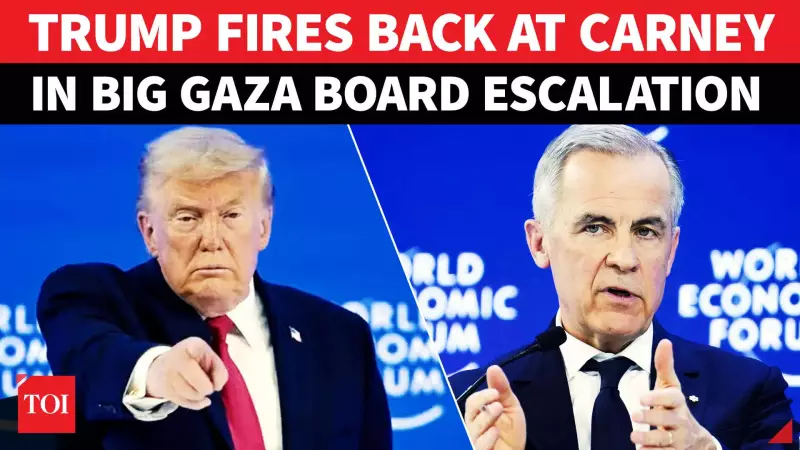
Trump Withdraws Canada's Invitation to 'Board of Peace' Amid Gaza Funding Dispute
In a significant diplomatic escalation, US President Donald Trump has formally withdrawn an invitation for Canada to join his newly established 'Board of Peace'. This move comes directly after Canadian Prime Minister Mark Carney declined a request to contribute $1 billion towards Gaza-related initiatives, as reported by TOI.in on January 23, 2026.
The Provocative Withdrawal Announcement
President Trump announced the decision through a post on his Truth Social platform, explicitly addressing Prime Minister Carney. "Please let this Letter serve to represent that the Board of Peace is withdrawing its invitation to you regarding Canada's joining," Trump stated. This public rebuke marks the latest in a series of tensions between the two North American neighbors, who have historically maintained strong diplomatic and economic ties.
Background: Carney's Warning and Canada's Stance
The withdrawal follows Prime Minister Carney's recent comments warning of a potential "rupture" in the US-led global order, which garnered international headlines. Despite this critical stance, Canada had previously indicated its willingness to participate in the Board of Peace, albeit with a clear condition: it would join but not pay any membership fees. The $1 billion request for Gaza appears to have been a tipping point, leading to the current diplomatic fallout.

Analyzing the Broader Implications
This incident highlights several key aspects of contemporary international relations:
- Shifting Alliances: The public nature of the dispute underscores potential cracks in traditional alliances, with Canada taking a more independent foreign policy stance.
- Financial Diplomacy: The explicit linking of board membership to financial contributions reveals an emerging trend where geopolitical participation is increasingly tied to monetary commitments.
- Communication Methods: Trump's use of social media for official diplomatic communications continues to challenge conventional diplomatic protocols.
Regional and Global Context
The Gaza funding aspect of this dispute connects to broader Middle Eastern geopolitics, while the Board of Peace initiative appears to be part of Trump's efforts to reshape international security architectures. This development occurs alongside other reported tensions between the US and European allies regarding Arctic and NATO matters, suggesting a period of significant recalibration in transatlantic relations.
As both nations navigate this diplomatic challenge, observers will be watching closely to see how this affects not only bilateral relations but also Canada's positioning within US-led international initiatives moving forward. The outcome may influence how other nations approach similar participation requests from the United States.