

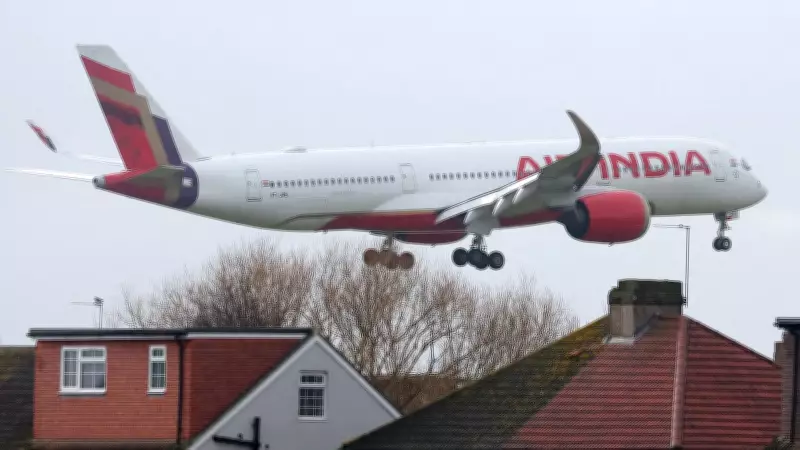
UK Aviation Regulator Seeks Detailed Account from Air India Over Boeing 787 Incident
Britain's aviation authority has formally requested Air India to provide a comprehensive explanation regarding a Boeing 787 Dreamliner passenger jet that departed from London with a potentially faulty fuel switch. The aircraft was subsequently grounded upon arrival in India for mandatory safety inspections, according to an official letter disclosed on Tuesday.
Regulatory Warning Issued to Air India
The UK Civil Aviation Authority (CAA), in its correspondence dated Tuesday, explicitly warned Air India about possible regulatory actions against both the airline and its entire Boeing 787 fleet. This stern warning comes with a clear deadline: the airline must submit a complete and thorough response within one week to avoid potential consequences.
Air India has responded to these concerns with a formal statement, asserting that the company has already conducted precautionary re-inspections of all relevant fuel switches. The airline confirmed that these inspections revealed no technical issues or malfunctions. Air India further committed to responding appropriately to the UK regulator's inquiries in accordance with standard aviation protocols.

Historical Context of Fuel Switch Concerns
This incident gains particular significance due to the tragic historical context surrounding fuel switches in Air India's Dreamliner fleet. Last year's devastating crash involving an Air India Boeing 787 in Gujarat state, which resulted in 260 fatalities, was directly linked to fuel switch malfunctions. These critical components regulate the precise flow of jet fuel into an aircraft's engines, making their proper function absolutely essential for flight safety.
The Gujarat tragedy prompted intensified scrutiny and regulatory oversight of Air India's operations, particularly concerning its Boeing 787 aircraft. This historical backdrop adds considerable weight to the current investigation and the UK CAA's insistence on comprehensive explanations.
Sequence of Events Leading to Grounding
The incident unfolded when Air India proactively grounded one of its Boeing 787 Dreamliners on Monday following a pilot's report of a possible defect with the aircraft's fuel control switch upon landing. According to subsequent investigations by Indian aviation authorities, the flight crew had observed concerning behavior during engine startup procedures in London.
The crew reported that the fuel control switch failed to remain securely latched in the 'run' position during two separate attempts. However, on the third attempt, the switch stabilized properly, leading the crew to proceed with the flight to India. Post-flight inspections conducted this week determined that the switches were functioning within normal parameters.
UK Regulator's Specific Demands
The UK Civil Aviation Authority has outlined specific requirements in its communication with Air India. The regulator demands a detailed account of all maintenance actions performed to ensure the aircraft's continued airworthiness and to justify its release for service to Bengaluru. Furthermore, the CAA has requested a comprehensive root-cause analysis of the entire incident.
Beyond mere explanation, the UK watchdog seeks a preventive action plan designed to eliminate any possibility of similar occurrences across Air India's entire Boeing 787 fleet. This proactive approach aims to address systemic issues rather than isolated incidents.
Air India's Internal Safety Measures
In response to these developments, Air India has implemented extensive internal safety measures. According to an internal memorandum circulated on Wednesday, the airline has conducted thorough inspections of fuel switches across its complete Boeing 787 fleet. Flightradar24 data indicates that Air India operates 33 Boeing 787 aircraft in total.
The internal communication confirmed that these comprehensive inspections revealed no technical issues with any of the fuel switches examined. This internal verification process represents part of the airline's broader commitment to maintaining the highest safety standards across its operations.

Industry and Manufacturer Responses
Boeing, the aircraft manufacturer, had previously acknowledged cooperation with Air India regarding this incident. However, the company has not provided additional comments in response to recent inquiries about the UK regulator's actions. The aviation industry continues to monitor this situation closely, given the global implications for Dreamliner operations and aviation safety protocols.
The UK CAA emphasized in its public statement that requesting detailed information following aircraft incidents represents standard regulatory procedure. This process aligns with established international safety assurance protocols designed to maintain the highest levels of aviation safety worldwide.





