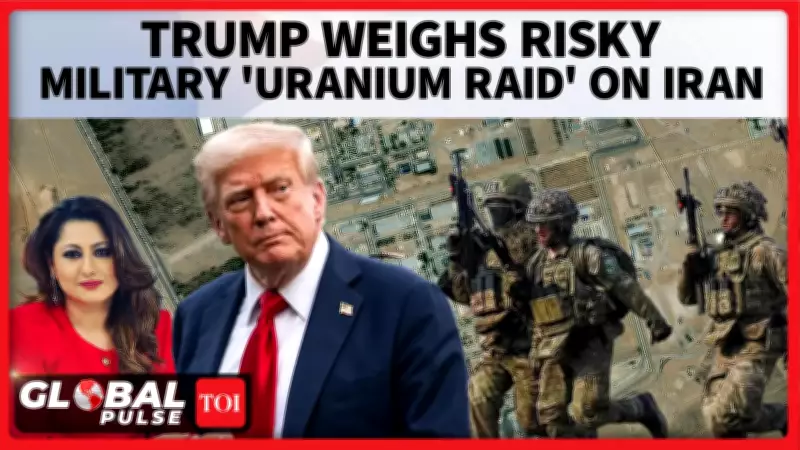
US Contemplates High-Stakes Military Operation to Confiscate Iran's Nuclear Materials
In a dramatic escalation of tensions, the United States is reportedly considering a bold and perilous military plan to seize Iran's stockpile of highly enriched uranium by force. According to recent reports, this high-risk strategy aims to target nearly 450 kilograms of nuclear material as a strategic lever to bring a swift conclusion to the ongoing war.
Details of the Proposed Operation
The concept, which has been highlighted by The Wall Street Journal, would necessitate the deployment of US troops into active Iranian nuclear facilities. These sites are believed to house critical stockpiles of enriched uranium, with key locations identified at Isfahan and Natanz, as indicated by Rafael Grossi, the head of the International Atomic Energy Agency.
Military experts have issued stark warnings about the complexities and dangers associated with such a mission. They emphasize that the operation would demand air superiority to secure the skies, specialized engineering teams to handle the sensitive nuclear materials, and special forces extraction units to ensure the safe retrieval and transport of the uranium.

Strategic Implications and Risks
This potential move by the US, under the leadership of President Donald Trump, represents a significant gamble in international diplomacy and military strategy. The seizure of Iran's nuclear stockpile is viewed as a means to exert maximum pressure and gain a decisive advantage in the conflict, potentially forcing Iran to the negotiating table.
However, the risks are immense. Entering Iranian territory to confiscate nuclear materials could provoke severe retaliation, escalate the war further, and destabilize the region. The operation's success hinges on precise execution and overcoming formidable logistical and security challenges.
Broader Context of Regional Tensions
This development occurs against a backdrop of heightened hostilities, including recent incidents such as Iran's execution of alleged spies, activation of aggressive military operations, and attacks on US and allied assets. The situation remains volatile, with global powers closely monitoring the unfolding events.
As the US weighs this controversial plan, the international community watches with bated breath, aware that any misstep could have far-reaching consequences for global security and stability.