

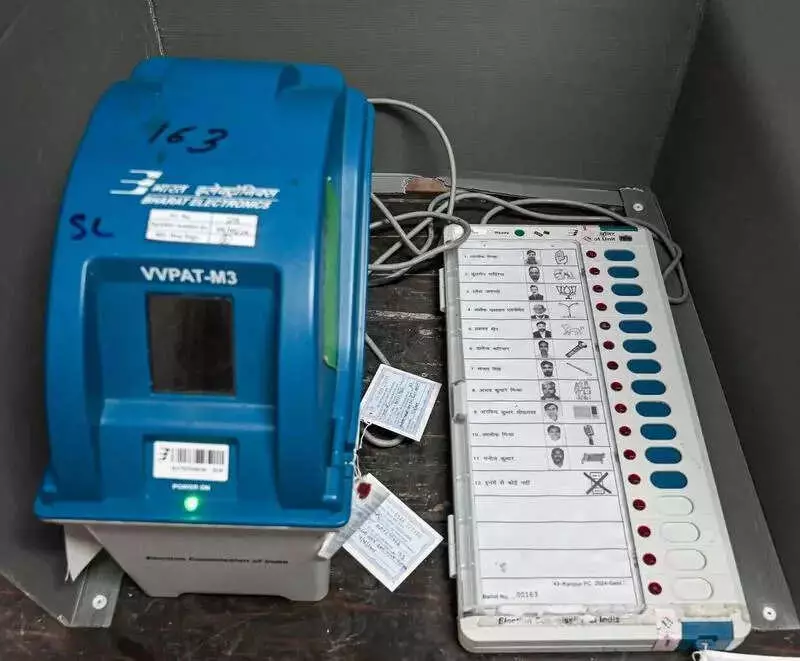
The Bharatiya Janata Party (BJP) in Punjab has raised serious concerns over the use of paper ballots in the recently concluded zila parishad and panchayat samiti elections. The party is now pushing for the adoption of Electronic Voting Machines (EVMs) in future local body polls, citing a high rate of vote rejection and significant delays in declaring results.
High Percentage of Invalid Ballots Raises Alarm
BJP state spokesperson Pritpal Singh Baliawal brought the issue to light through social media platform X. He shared detailed figures showing that nearly 3.75% of votes were rejected in the districts of Patiala and Sangrur. In the Patiala zila parishad elections specifically, out of 8,87,600 registered voters, a total of 4,09,822 ballots were cast. From these, a staggering 15,386 votes were declared invalid.
The situation was similar in the panchayat samiti elections within Patiala district, where 14,757 votes, accounting for 3.85% of the 3,83,279 votes polled, were rejected. Sangrur district also witnessed around 13,000 invalid ballots from nearly 3.5 lakh votes cast. Baliawal claimed that the slow manual counting of paper ballots meant only about 40% of results were announced even after 33 hours, and alleged that hundreds of thousands of votes were rejected across Punjab.

BJP's Formal Push for Electronic Voting Machines
In an official press statement, Pritpal Singh Baliawal highlighted that the opposition Indian National Congress had itself accused the ruling Aam Aadmi Party of attempting to rig these paper ballot-based elections. He argued that EVMs have consistently proven to be a more reliable system for ensuring free and fair elections by minimizing human error and speeding up the counting process.
Consequently, the BJP announced it would formally request the Punjab State Election Commission to adopt EVMs for all future local body elections in the state. The party's stance is that technology can help restore greater trust and efficiency in the electoral process at the grassroots level.
Official Response and Voter Awareness Challenge
However, election officials presented a different perspective. They stated that no political party had lodged a formal complaint alleging coercion or manipulation specifically in the rejection of votes. Officials attributed the high number of invalid ballots largely to technical errors by voters, such as the incorrect folding of paper ballots or handling ballots with ink-stained fingers after voting.
This, they underlined, points to a pressing need for enhanced voter awareness and training to prevent such wastage of votes in future elections conducted via paper ballots.
An official from the State Election Commission refrained from commenting directly on the specific vote rejection figures shared by the BJP. The official stated that both paper ballots and EVMs are effective electoral tools, noting that except for the last few years, elections in Punjab have traditionally been conducted using paper ballots. The official also reminded that EVMs have faced their own share of criticism over the years.
Emphasizing the robustness of Punjab's electoral process, the official concluded that elections in the state have largely remained free and fair, irrespective of the voting method employed.






