

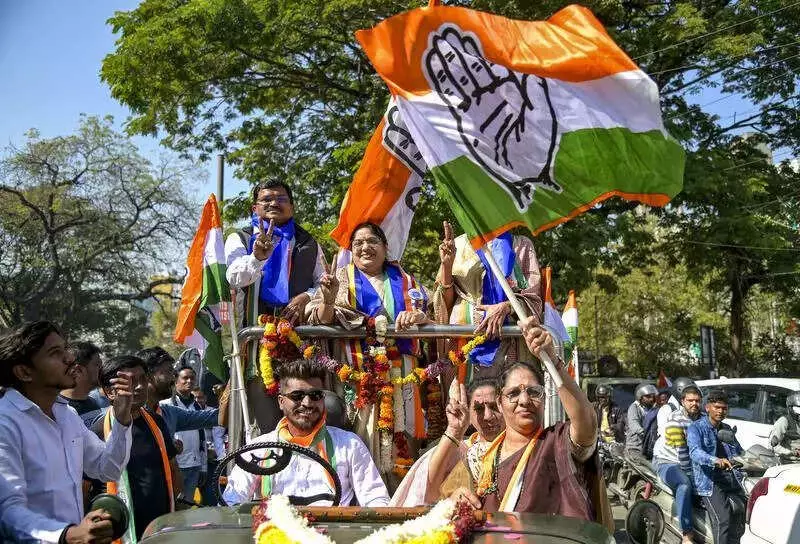
The electoral battle for the 151 seats of the Nagpur Municipal Corporation (NMC) House is shaping up to be one of the most fragmented contests in the city's recent political history. A detailed analysis of candidate data across prabhags reveals a landscape dominated by multi-cornered fights, with only a few pockets witnessing direct duels.
A Surge of Candidates Creates Electoral Chaos
The shift to a four-member ward structure, covering Prabhag 1 to 37, along with 3 seats in Prabhag 38, has triggered an unprecedented surge in the number of aspirants. This trend is particularly pronounced in politically sensitive and open category wards. Political observers note that election mathematics becomes highly unpredictable when a single seat attracts more than eight candidates. In such scenarios, voter loyalties blur, and even small pockets of consolidated votes can dramatically alter the outcome.
In Nagpur's case, the situation has far exceeded this threshold. The data shows that there are a staggering 28 prabhags where more than ten candidates are in the fray. This creates perfect conditions for massive vote division, intense backroom bargaining, and unexpected results.

Mini Battlegrounds with Record Contenders
Several wards have transformed into veritable mini battlegrounds. Prabhag 5D, for instance, has as many as 18 candidates who have filed nominations. The contest in Prabhag 2D is even more crowded, with 19 names on the ballot paper. Topping this list is Prabhag 3D, where a remarkable 20 candidates are contesting for a single seat, setting the stage for a classic case of a fractured mandate.
For major political parties, this surge is a double-edged sword. While large fields of candidates can potentially weaken their rivals, they also pose a significant threat to the parties' own official nominees. This is especially true in areas where rebel candidates and influential Independents hold sway over local voters. Consequently, campaign managers are being forced to adopt micro-level strategies. These include forging silent understandings, focusing on selective voter mobilisation, and attempting to tactically split opponents' support bases without eroding their own.
Islands of Clarity Amidst the Fragmentation
Amidst this widespread electoral chaos, a few prabhags stand out for their stark clarity, featuring straight, head-to-head contests. These high-stakes duels are set to be dominated by organisational strength and cadre mobilization rather than fragmented vote arithmetic.
The notable direct contests include:
- Maya Iwnate versus Omprakash Wadwe in Prabhag 12B
- Madhuri Fulsunge against Anjana Madavi in 14B
- Sunil Hiranwar facing Sandesh Singalkar in 15B
- Dhanashri Deshpande versus Vishakha Sharma in 15C
- Yogesh Madavi vs Ramchandra Gajbhe in 29B
- Vijay Jhalke vs Rahul Abhang in 28A
- Kalpak Bhanarkar vs Ashok Dhapodkar in 22A
The overall picture that emerges is one of deep electoral imbalance. While large swathes of Nagpur will vote in crowded, highly unpredictable contests where every vote counts and winning margins could be razor-thin, a select few wards will witness direct political battles. As the campaign intensifies, the real story of this election is likely to be written not by any sweeping wave, but by the quiet, complex arithmetic of divided votes. Victory may ultimately belong to those candidates who can successfully hold their core vote bank together when everyone else's support is splintering.






