As Punjab prepares for the next Assembly elections, panthic issues have once again come to dominate the political discourse. The proposed amendments to the Jagat Jyot Guru Granth Sahib Satkar Act, sacrilege cases, the SIT probe into the Behbal Kalan police firing, and the Akal Takht's directives against Chief Minister Bhagwant Mann have intensified the political atmosphere.
Despite these emotionally charged matters, parties that claim to represent Sikh interests are still struggling to move from the political margins to the centre stage.
Akali Factions and the Contest for Panthic Space
The competition within panthic politics now appears largely confined to the Shiromani Akali Dal (Badal) and the Akali Dal Waris Punjab De (WPD). The recently formed Shiromani Akali Dal Punar Surjeet, which broke away from the SAD in August 2025, has suffered major setbacks, raising doubts about its ability to survive until the elections.

Punjab has seen several breakaway Akali factions over the past few decades, but none has managed to emerge as a credible alternative to the Shiromani Akali Dal (Badal). Most disappeared after contesting just one election. The Punar Surjeet faction has weakened even before facing the electorate. After Dakha MLA Manpreet Singh Ayali, senior leaders Iqbal Singh Jhunda, Sant Singh Umedpuri and SGPC member Satwinder Singh Tohra have distanced themselves from the party.
Political observers initially expected an alliance between Waris Punjab De and Punar Surjeet to challenge the SAD. Instead, Waris Punjab De appears to have targeted the smaller Akali faction first, leaving Punar Surjeet politically isolated. Analysts believe only a handful of prominent leaders remain with the party, and even their long-term commitment remains uncertain.
Waris Punjab De's Expanding Appeal
The two principal panthic claimants are pursuing contrasting political strategies. The Shiromani Akali Dal (Badal) is attempting to revive its lost panthic image through the ongoing ‘Miri Piri Khalsa March’. In contrast, Akali Dal Waris Punjab De, led politically by jailed Khadoor Sahib MP Amritpal Singh, is trying to broaden its appeal beyond its core Sikh support base.
Tarsem Singh, the party's working president and Amritpal Singh's father, has announced that if elected, the party would appoint two Deputy Chief Ministers — one from the Hindu community and another from the Dalit community. The party is also focusing on issues such as drug abuse to attract Hindu and Dalit voters, signalling an effort to project itself as a broader political force.
At present, Waris Punjab De has two Members of Parliament and one MLA, while the Shiromani Akali Dal (Badal) has one MP and one MLA.
Congress and AAP's Panthic Forays
The Congress has also attempted to strengthen its panthic credentials. At the Akal Takht gathering on June 28, Congress MLAs publicly expressed complete submission to the authority of the Akal Takht. Senior leaders, including former Chief Minister Charanjit Singh Channi, Pargat Singh and Sukhpal Singh Khaira, have projected themselves as closely aligned with Sikh religious and community concerns.
The ruling Aam Aadmi Party has made sustained efforts to strengthen its standing among Sikh voters. Its initiatives include the proposed Guru Granth Sahib Satkar Act, the observance of Guru Tegh Bahadur's centenary, granting holy city status to Amritsar, holding a special Assembly session at Anandpur Sahib, and the appearance of its MLAs before the Akal Takht. These moves indicate that the party does not want the panthic vote to remain the exclusive preserve of the Akalis.
Punjab's politics has long been shaped by the belief that a Sikh-centric party alone cannot secure a clear Assembly majority. This perception justified the SAD-BJP alliance, which remained in power for two consecutive terms. Electoral trends over the past five decades support this view, with the Congress historically being the only party to independently secure a majority. The Aam Aadmi Party reinforced this in 2022 by winning a sweeping majority on a broader secular platform.

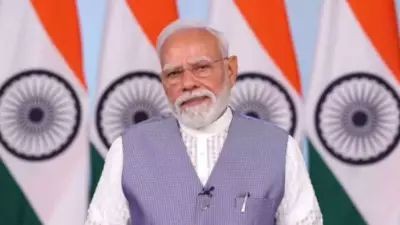
Prime Minister Narendra Modi's recent remarks during the inauguration of the redeveloped Jalandhar railway station have fuelled speculation that a revival of the BJP-SAD alliance is unlikely before the next Assembly elections. Many observers believe the Shiromani Akali Dal's silence on several panthic issues while in power contributed to the erosion of its traditional support base.
Although the Akali factions are currently out of power and are not directly confronting each other, they are aware that any division of the traditional panthic vote is likely to benefit either the ruling AAP or the Congress. This concern has resulted in occasional calls for unity, even as political rivalry continues.