

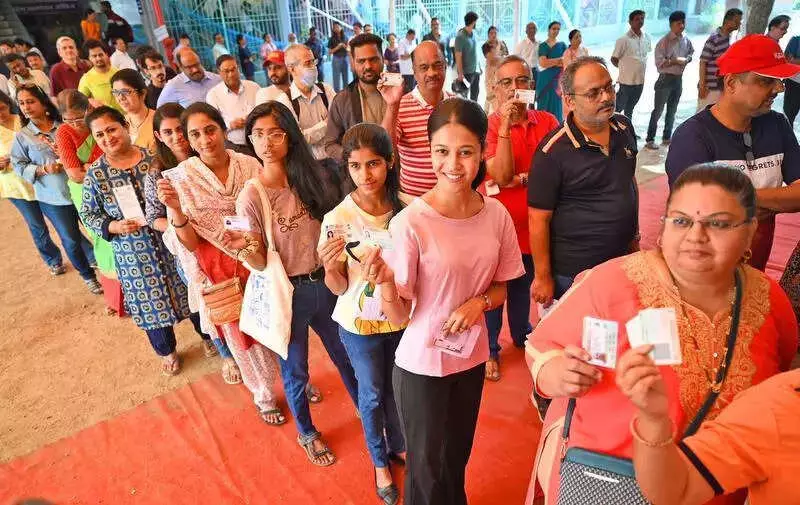
The high-stakes drama surrounding the Pune Municipal Corporation (PMC) elections has escalated into a spectacle of confusion, leaving the city's electorate bewildered and cynical. With the nomination deadline looming, the political landscape is in a state of chaotic flux, as seasoned corporators and hopeful aspirants engage in a frenzied game of musical chairs, switching party allegiances overnight.
A City-Wide Phenomenon of Voter Alienation
This last-minute political defection is not confined to a single locality but has become a city-wide phenomenon. From Karvenagar to Wagholi and Kharadi, residents express a deep sense of alienation. The core issues plaguing Pune—pothole-ridden roads, erratic water supply, and unending traffic snarls—seem secondary to the survival tactics of politicians. "Our vote is being taken for granted," is a sentiment echoing across diverse neighborhoods, highlighting a growing disconnect between the elected representatives and the citizens they are supposed to serve.
In Karvenagar, shopkeeper Rajesh Kulkarni, 52, voiced the frustration of many. "We were told for five years that this corporator stood for a particular ideology. Suddenly, he is in another party — smiling under a new symbol," he said. This abrupt shift in principles, visible just a day before the nomination deadline on Monday night, has eroded public trust, making it difficult for voters to anchor their belief in any political promise.

Disillusionment Across Generations and Genders
The confusion and disappointment cut across age and gender. In the older parts of the city, like Sadashiv Peth, long-time residents speak of a palpable sense of letdown. Retired teacher Shantaram Joshi pointed out the challenge of explaining this opportunistic political landscape to first-time voters. Meanwhile, the younger generation is struggling to navigate the chaos. College student Ayesha Shaikh from Kondhwa finds the constantly changing party names and symbols on social media posters make the entire political process seem unreliable.
Women voters, in particular, feel a strong sense of betrayal. Homemaker Sunita Deshmukh of Hadapsar articulated this, stating that when leaders join parties they once criticized, it feels like a misuse of the trust placed in them. For voters in rapidly growing areas like Wagholi and Kharadi, where civic amenities are a daily battle, patience is wearing thin. Software professional Sneha Patil from Kharadi emphasized that while party affiliation is secondary to solving basic problems, the unexplained party-hopping makes voters feel entirely irrelevant.
The Blunt Truth from the Ground
Auto driver Mahesh Jadhav from Yerawada offered a blunt summation of the prevailing mood. "In the end, they will ask for our vote, but no one has explained why they changed sides. This election feels less about the city and more about survival," he remarked. This sentiment captures the essence of the current electoral climate in Pune—a high-voltage political drama where the voters have been reduced to a silent, confused audience.
As the campaigning intensifies, Pune's citizens are left waiting for clarity and accountability. The suspense over final candidates may fuel excitement among political workers, but for the common voter, it has fostered disillusionment. The fundamental question remains unanswered: in this whirlwind of changing symbols and ideologies, does their vote truly count for anything more than political survival?






