

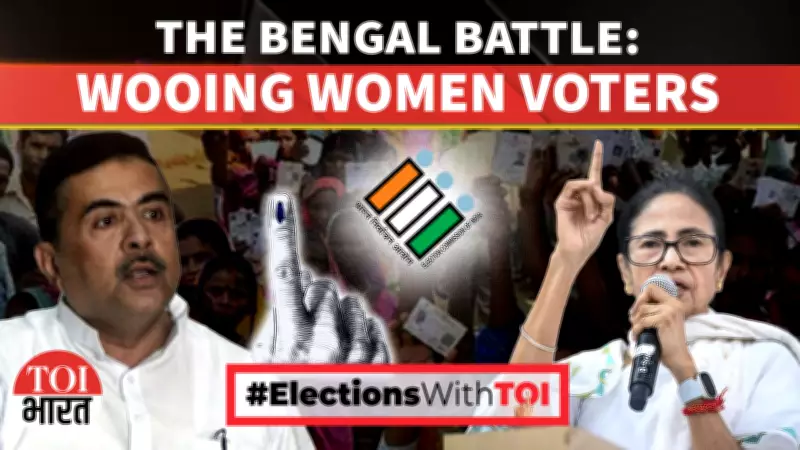
Women's Vote in Bengal Elections: A Potential Game-Changer for Political Fortunes
As the West Bengal elections approach, political parties are intensifying their efforts to secure the support of women voters, recognizing their potential to sway the outcome. From cash incentives to safety assurances, the competition is fierce, with each party tailoring its message to appeal to this crucial demographic.
Political Strategies to Woo Women Voters
The Trinamool Congress, under the leadership of Chief Minister Mamata Banerjee, is leveraging its track record of welfare initiatives. Key among these is the Lakshmir Bhandar scheme, which provides financial assistance to women, aiming to bolster their economic independence and loyalty to the party.
In contrast, the Bharatiya Janata Party (BJP) is making a bold pitch with a promise of Rs 3,000 monthly support for women, coupled with commitments on job creation and enhanced security measures. This move is seen as an attempt to challenge the incumbent's welfare narrative and attract voters seeking change.

Meanwhile, the Congress party is not far behind, offering its own proposals for financial aid and governance improvements, though it faces an uphill battle in a state dominated by two major players.
Beyond Monetary Promises: The Broader Context
This election transcends mere financial incentives. With voter turnout on the rise, women are increasingly participating at levels that match or even exceed those of men in many constituencies. This shift has transformed the political landscape, making the battle for Bengal essentially a battle for women's votes.
Factors such as safety concerns, educational opportunities, and overall empowerment are playing significant roles in shaping women's political choices. Parties are thus compelled to address these broader issues, moving beyond cash promises to build comprehensive narratives that resonate with female voters.
Implications for the Election Outcome
The heightened focus on women voters underscores their growing influence in West Bengal's politics. As parties vie for their support, the election could hinge on which group successfully connects with women's aspirations and concerns. Key points to consider include:
- The effectiveness of welfare schemes like Lakshmir Bhandar in retaining women's loyalty.
- The appeal of the BJP's cash promise and security assurances in swaying undecided voters.
- The role of rising turnout and women's increased political engagement in determining results.
Ultimately, with women voters poised to be a decisive factor, the outcome of the Bengal polls may well be shaped by their preferences, making this election a critical test of political strategies aimed at female empowerment and inclusion.






