India's ouselisting Census 2026: A Digital Revolution with Expanded Questions
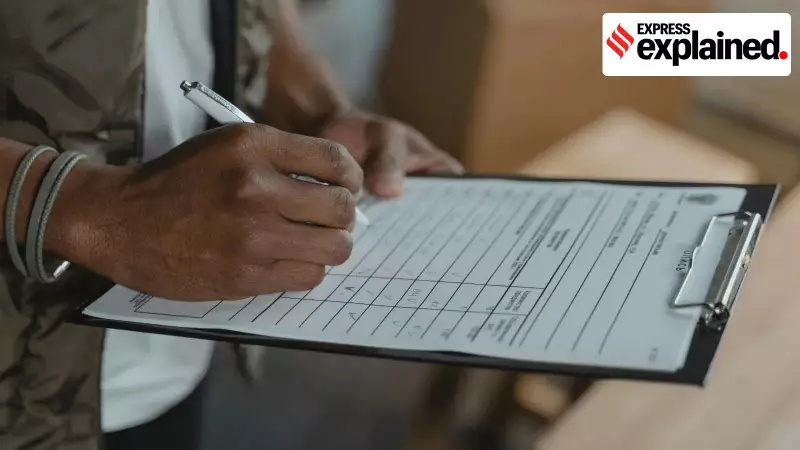
As India gears up for the 16th Census, set to be conducted after a six-year delay, the government has officially notified the details for the houselisting and housing Census phase. This foundational stage, scheduled to run from April 1 to September 30, 2026, across all States and Union Territories, will meticulously map every structure and household in the country. It serves as the critical framework upon which the entire Census exercise rests, paving the way for the population enumeration in 2027.
What is the Houselisting Phase?
The houselisting phase is a precursor to the population count, designed to create a comprehensive inventory of buildings, Census houses, and households throughout India. Unlike the population enumeration that focuses on individuals, this phase captures essential information about living conditions and habitats. Enumerators will visit every structure, whether residential, commercial, or mixed-use, assigning unique Census house and household numbers. This process enables the Registrar General of India (RGI) to assess housing conditions, access to basic amenities, and household assets, while finalizing enumeration blocks for the main Census.
Digital-First Approach for Census 2027
For Census 2027, the houselisting phase is embracing a digital-first methodology. Enumerators will utilize a mobile application on smartphones or handheld devices to collect and upload data efficiently. The app supports offline data entry with automatic syncing once connectivity is available. In a groundbreaking move, the Census architecture now allows for self-enumeration. Households can opt to fill in details online via a government portal, with enumerators subsequently verifying and authenticating the entries during visits.

Each Census house will be geo-tagged, ensuring precise mapping and minimizing risks of omission or duplication. Supervisors will monitor progress in near real-time through dashboards under the Census Management and Monitoring System (CMMS), enhancing accuracy and oversight.
Why the Houselisting Phase Has Been Reimagined
According to the RGI, unlike previous Censuses where houselisting served descriptive purposes, the 2027 Census treats this phase as the backbone for digital enumeration, self-enumeration, geo-referencing, and quality control. With the shift to mobile applications and real-time monitoring, errors at this stage could cascade through the entire Census. Accurate identification of structures, households, and amenities is crucial not only for coverage but also for linking housing data with individual-level socio-economic information, including caste, in the population phase. This necessitates greater precision, standardization, and verification in the houselisting design.
Differences from Previous Censuses
The houselisting exercise in 2011 was largely paper-based, relying on handwritten schedules and physical maps, with data entry and validation often taking years. In contrast, the 2026 houselisting will:
- Use GPS tagging of houses and enumeration blocks for accurate mapping.
- Rely on standardized drop-down menus instead of descriptive handwritten answers to reduce errors.
- Enable instant validation checks for inconsistencies to ensure data integrity.
- Allow faster aggregation and processing of data through digital tools.
Additionally, the scope of questions has expanded to reflect shifts in living standards, digital access, and consumption patterns over the past decade.
Questions to Be Asked in the Houselisting Census
Under a notification issued in January 2026 under the Census Act, 1948, Census officers are authorized to collect information under 33 items during the houselisting and housing Census. These questions are broadly categorized into six areas:

- Identification and Structure: Includes building number, Census house number, materials used for floor, walls, and roof, condition, and use of the Census house.
- Household Composition: Records household number, total persons usually residing, name and sex of the head of household, and caste category (Scheduled Caste, Scheduled Tribe, or other).
- Ownership and Space: Covers ownership status, number of dwelling rooms in exclusive possession, and number of married couples—key indicators for assessing overcrowding and housing shortages.
- Water, Sanitation and Energy Access: Questions on main source of drinking water, availability within premises, source of lighting, access to latrine, type of latrine, waste water outlet, bathing facility, kitchen presence, and LPG or piped natural gas (PNG) access.
- Fuel and Digital Connectivity: Inquiries about main fuel used for cooking and access to the internet—a new development indicator reflecting digital connectivity's role in governance and service delivery.
- Assets and Consumption: Records ownership of assets like radio, television, laptop or computer, telephone/mobile phone/smartphone, bicycles, two-wheelers, and cars. A new question on the main cereal consumed offers insights into dietary patterns and food security.
Seven new or revised questions have been added compared to the 2010 questionnaire, including:
- Availability of internet connection in the house.
- Ownership of mobile phone and smartphone.
- Access to drinking water source inside the dwelling.
- Gas connection type—distinguishing between piped natural gas and LPG.
- Vehicle ownership—with distinctions between two-wheelers, four-wheelers, and commercial vehicles.
- Type of cereal consumed in the household.
In another first, households will be requested to share a mobile number for Census-related communications only, intended for follow-ups and information dissemination.
Importance of These Questions
Houselisting data is vital for policymaking in India. Information on housing quality informs schemes such as PM Awas Yojana, while data on water, sanitation, and cooking fuel shapes interventions under Jal Jeevan Mission, Swachh Bharat Mission, and Ujjwala. Asset ownership and internet access help governments identify digital and economic divides. The updated question set reflects an evolved definition of deprivation, extending from basic shelter to connectivity, clean energy, and mobility, ensuring that the Census captures contemporary socio-economic realities.