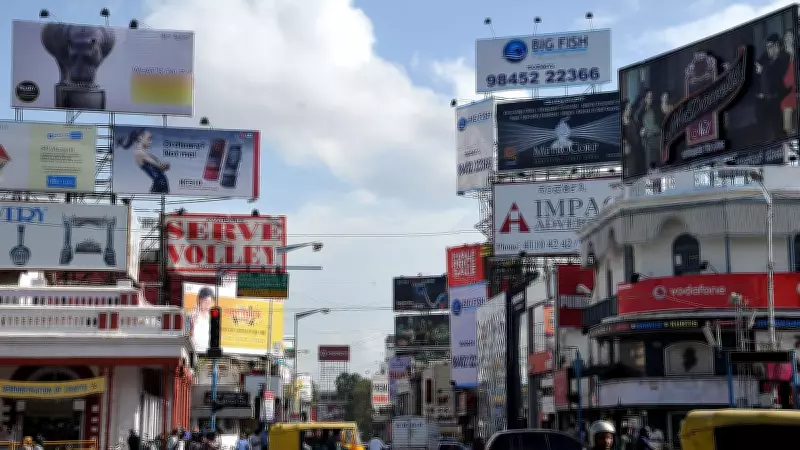
Civic Activists Sound Alarm Over Bengaluru's Resurging Hoarding Menace
Civic activists in Bengaluru are raising urgent concerns about the return of roadside hoardings and banners, warning that this trend poses significant clutter and safety risks across the city. The resurgence of these traditional advertising structures has sparked a heated debate about urban aesthetics and public safety in India's tech capital.
Former Corporator Highlights Historical Context
Former corporator Padmanabha Reddy has provided crucial historical perspective on this issue, noting that roadside hoardings and banners were once considered a necessity during an era when digital advertising and electronic media were not as advanced as they are today. Reddy emphasized that these traditional advertising methods served an important purpose in earlier decades, when businesses and political campaigns relied heavily on physical displays to reach the public.
"The landscape of advertising has transformed dramatically with the digital revolution," Reddy observed, pointing to the contrast between past practices and current technological capabilities. His comments underscore the fundamental question of whether such physical advertising structures remain relevant in today's digitally-driven environment.

Safety and Clutter Concerns Take Center Stage
The primary concerns raised by civic activists focus on several critical areas:
- Visual clutter that disrupts Bengaluru's urban landscape
- Safety hazards for pedestrians and motorists, particularly during adverse weather conditions
- Obstruction of visibility at intersections and along major thoroughfares
- Potential structural failures of improperly installed hoardings
These concerns have gained particular urgency as Bengaluru continues to grapple with infrastructure challenges and rapid urban development. The return of hoardings represents what many activists describe as a step backward in urban planning and public safety standards.
The Digital Advertising Contrast
Activists are particularly vocal about the irony of traditional hoardings returning to prominence in a city known as India's technology hub. Bengaluru's status as a center for digital innovation makes the reliance on physical advertising structures seem particularly anachronistic. The city hosts numerous digital marketing agencies and technology companies that specialize in modern advertising solutions, yet physical hoardings continue to proliferate.
This situation has prompted calls for updated regulations and enforcement mechanisms to address the specific challenges posed by roadside advertising in the digital age. Many activists argue that current policies have failed to keep pace with technological advancements and changing urban needs.
Looking Forward: Balancing Tradition and Modernity
The debate over Bengaluru's hoardings reflects broader tensions between traditional practices and modern urban planning principles. While acknowledging the historical role of such advertising methods, civic groups are pushing for:
- Stricter enforcement of existing regulations governing outdoor advertising
- Development of comprehensive guidelines that address both safety and aesthetic concerns
- Greater emphasis on digital alternatives that reduce physical clutter
- Regular safety audits of existing hoarding structures
As Bengaluru continues to evolve as a major metropolitan center, the resolution of this issue will likely influence urban planning approaches across India. The city's handling of the hoarding controversy may set important precedents for how Indian cities balance commercial interests with public safety and urban aesthetics in the digital era.