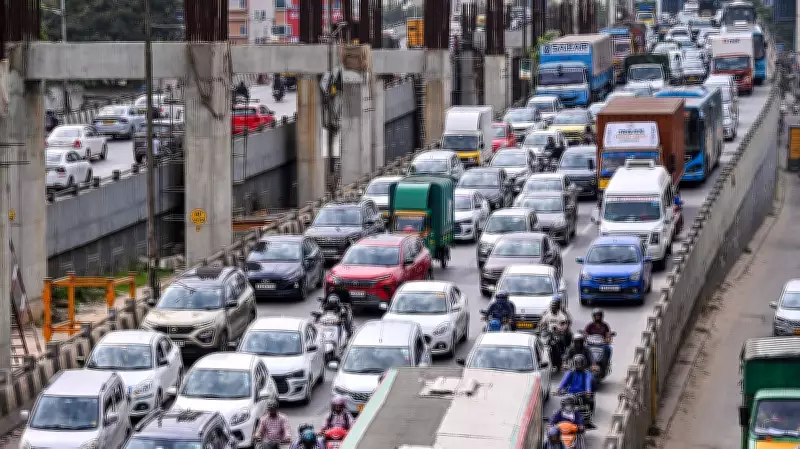
Bengaluru's notorious traffic congestion is taking a heavy toll on commuters' mental health and workplace efficiency, with average one-way commute times now exceeding 60 minutes, according to a 2026 study by the Centre for Sustainable Mobility. The report highlights that prolonged commutes are linked to a 25% increase in self-reported stress levels among employees, directly impacting productivity.
Commute Times and Stress Levels
The study surveyed over 5,000 commuters across major IT corridors such as Outer Ring Road and Whitefield. It found that 68% of respondents spend more than two hours daily commuting, with 42% reporting significant stress. "The constant stop-and-go traffic leaves workers exhausted before they even reach the office," said Dr. Ananya Sharma, lead researcher at the centre.
Impact on Workplace Productivity
Employers are feeling the pinch. A separate analysis by the Bengaluru Chamber of Commerce estimates that traffic-related delays cost companies ₹12,000 crore annually in lost productivity. Employees arriving late or fatigued are 30% less efficient in the first two hours of work, the report notes.

Infrastructure and Policy Responses
Despite ongoing metro expansion and the introduction of dedicated bus lanes, the number of private vehicles has grown by 8% annually. "We need integrated solutions, not just more roads," said urban planner Rajesh Kumar. The state government has announced a ₹5,000 crore plan for elevated corridors, but critics argue it will take years to ease congestion.
Health and Social Costs
The stress from long commutes is also linked to health issues. A 2025 health survey by NIMHANS found that 1 in 3 Bengaluru commuters suffers from chronic fatigue or hypertension. "Traffic is a public health crisis," said Dr. Priya Singh, a physician at a corporate clinic in Electronic City.