

Bengaluru's Bold Rs 150 Crore Flyover Initiative to Alleviate Varthur-Gunjur Congestion
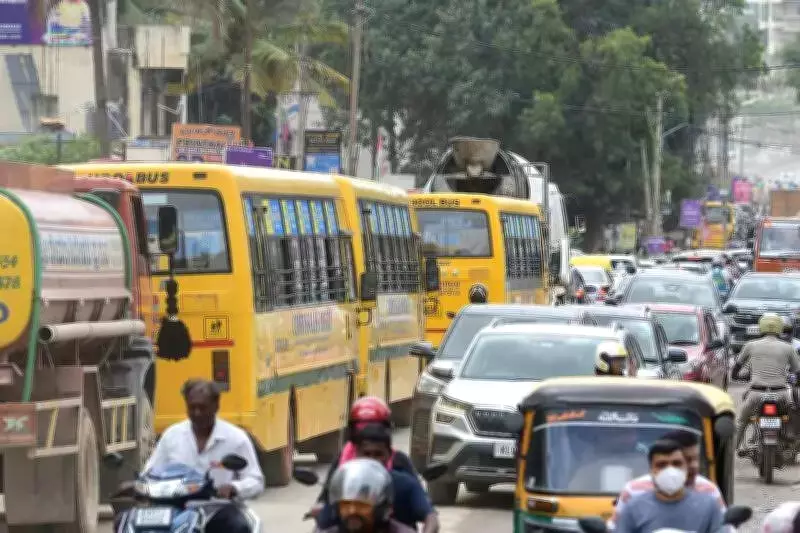
The daily commute along State Highway-35 between Varthur and Gunjur in Bengaluru is widely regarded as a severe ordeal. Thousands of IT professionals crawl each morning through a narrow carriageway that has failed to keep pace with the rapid proliferation of high-rise apartment towers lining both sides. In response, the Bengaluru East City Corporation (BECC) has unveiled an ambitious solution in its 2026-27 budget: a Rs 150-crore elevated corridor designed to take this congested stretch off-grade for the first time.
Seamless Elevated Corridor Proposal
The proposed flyover extends approximately 1.5 kilometers beyond a structure currently under construction by the Karnataka Road Development Corporation Limited (KRDCL), which is building a 1.9-kilometer flyover from Varthur Kodi to Varthur near Vinayaka Theatre. BECC's plan aims to create a seamless four-lane elevated corridor, 7.5 meters wide with a central median, running the full Varthur-to-Gunjur length. Funding for this project will be secured through municipal bonds.
This corridor has experienced rapid, dense urbanisation over the past decade, with numerous high-rise residential layouts absorbing a large working population that relies heavily on the same bottlenecked road. Once both stretches are complete, the corridor is expected to significantly reduce travel time and alleviate pressure on one of the eastern belt's most dysfunctional junctions.

Challenges and Coordination Hurdles
However, a major caveat exists. The KRDCL project, which includes road widening alongside the flyover, has been underway for over five years. Officials report that side drain works are nearly complete and about 80% of land acquisition is done, with a 2027 completion target set. For a project already delayed past multiple internal deadlines, this target carries uncertainty, and the BECC extension cannot commence until KRDCL finishes its portion. Historically, coordination between agencies has been a weak link in Bengaluru's infrastructure chain, as noted by residents.
Comprehensive Infrastructure Investments
The rest of the public works budget addresses the East zone's infrastructure deficit at scale. Arterial and sub-arterial road improvements across multiple divisions have been budgeted at Rs 298.1 crore, covering areas such as Marathahalli (Rs 30 crore), Doddanekundi (Rs 32.5 crore), Whitefield (Rs 17 crore), Ramamurthy Nagar (Rs 27.4 crore), and KR Pura (Rs 20.5 crore). Road and drain maintenance across 50 wards receives Rs 112.5 crore, while ward-level roads under the Chief Minister's Infrastructure Development Programme draw Rs 50 crore.
Pedestrian infrastructure, chronically neglected in this part of the city, receives notable attention. The budget earmarks Rs 160 crore for 9 kilometers of footpaths along Metro viaducts under the ORR Companies Association, alongside a stated target of 100 kilometers of footpath development across the zone.
Focus on Outer Ring Road and Welfare Schemes
The long-term future of the Outer Ring Road (ORR) is addressed separately, with Rs 450 crore from the state government set aside for development of the Silk Board-to-KR Pura stretch. This corridor functions as the spine of Bengaluru's IT economy and regularly collapses under its own traffic weight.
In welfare initiatives, free electric two-wheelers for working women and civic workers headline the budget, accounting for 7% of total spending. The Rs 221-crore social upliftment allocation covers housing subsidies of Rs 5 lakh for 1BHK units, free laptops for students from disadvantaged backgrounds, and fee reimbursements extending to overseas education, targeting SC/ST, backward class, minority, and other vulnerable groups.
AI Deployment and Veterinary Clinics
East corporation is deploying artificial intelligence to close a long-standing revenue gap. A new system will cross-reference Bescom, BWSSB, trade licence, building plan, and e-Aasthi databases against the property tax network to identify defaulters and map unassessed properties, with the potential to generate an additional Rs 100 crore annually. A parallel AI-driven attendance system will monitor staff punctuality across the corporation.

Additionally, two dedicated veterinary clinics, a first for East corporation, will be established in 2026-27 to serve both small and large animals within city limits. An initial Rs 2 crore has been allocated to set up and maintain these facilities, expanding civic infrastructure to include animal healthcare.
Funding and Flood Management
Bengaluru MLAs had pushed for Rs 5 crore per ward at a pre-budget meeting chaired by Deputy Chief Minister DK Shivakumar. The East corporation has settled at Rs 2.2 crore across all 50 wards, mirroring the Central corporation's allocation, earmarked for road and drain development and maintenance. This gap between legislative expectation and budgetary reality leaves discussions on ward-level funding unresolved.
Rs 629 crore in World Bank-assisted funding is driving stormwater drain upgrades across the East corporation, with Rs 540 crore in Mahadevapura and Rs 89 crore in KR Pura across six work packages. Of 58 identified flood-prone areas, 38 have been addressed, with completed works including the Panathur drain and retaining walls along key stretches.
Citizen Reactions and Accountability Concerns
RK Misra, director of B-Smile, noted that the budget feels like more of the same, with about 60% going into infrastructure but lacking transformative projects. He emphasized that the Varthur-Gunjur flyover extension is a good step but only makes sense once the existing KRDCL flyover is completed, highlighting the need for improved basic infrastructure like drains and footpaths.
Manas Das, president of the Outer Ring Road Companies Association, stated that allocations are a step in the right direction, especially with the focus on easing traffic along key stretches. However, he pointed out that the real test lies in execution, as employees' biggest concern is reducing commute time.
Anjali Saini, a resident of East corporation, expressed that while the budget has many good initiatives on paper, accountability and execution remain critical issues. Without transparency and real-time monitoring, these allocations risk becoming mere numbers rather than meaningful improvements.
Balaji Raghotham, a lake activist, raised concerns about sewage inflow into lakes, stating that true rejuvenation is impossible without addressing this issue.
A Raghavendra of Purva Palm Beach Owners Association mentioned that roads remain a significant challenge with bottlenecks and poor coordination, but welcomed increased streetlights and action against stormwater drain encroachments.
Ajit S of Whitefield Rising highlighted the importance of the proposed public digital dashboard for driving accountability through real-time transparency and tracking, noting that many projects are carry-overs from previous promises.





