

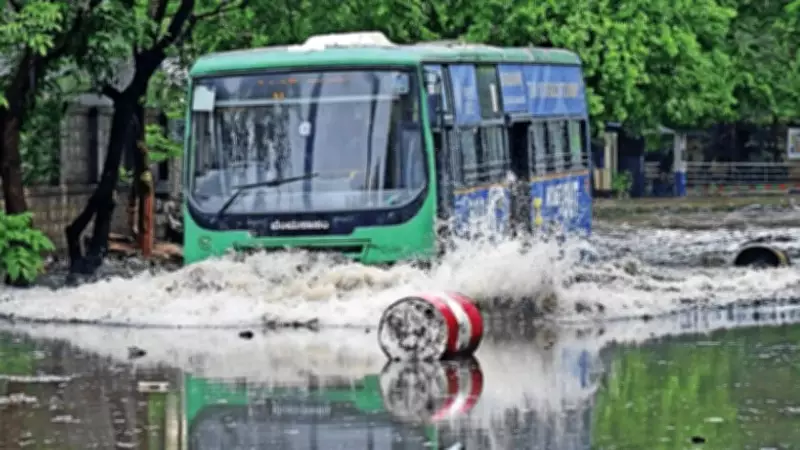
Bengaluru's Rs 1,760 Crore Budget Aims to Transform Urban Infrastructure with Climate-Resilient Solutions
In a bold move to address its persistent flooding woes, the Bengaluru Central City Corporation (BCCC) has unveiled a comprehensive Rs 1,760 crore budget for the 2026–27 fiscal year. This ambitious plan shifts focus from mere repairs to a holistic redesign of the city's infrastructure, treating the urban crisis as an urgent climate challenge.
Innovative Porous Pavements to Recharge Groundwater
At the heart of this initiative is the introduction of rainwater-absorbing footpaths. BCCC commissioner Rajendra Cholan explained, "A rainwater-absorbing footpath will be designed using asphalt without sand, making it porous enough for water to seep through the pavement into an underlying stone drainage system. This allows rainwater to quickly recharge groundwater levels, making it a sustainable solution that can withstand climate change." This innovative approach aims to prevent water pooling and flooding on streets, a common sight during Bengaluru's monsoons.
Comprehensive Allocation for Road and Drainage Networks
The budget earmarks significant funds for road infrastructure, targeting both arterial and ward-level networks. Key allocations include:

- Rs 217.5 crore from a state grant for developing 145 km of arterial and sub-arterial roads by May 2026.
- Rs 200 crore under the Chief Minister's Infrastructure Development Programme for 115 km of ward roads and 10 community buildings.
- Rs 141.7 crore distributed across all 63 wards, ensuring each receives Rs 2.2 crore for local development.
Ward-level funds are further broken down into Rs 1.5 crore for development works, Rs 75 lakh for pothole and drain maintenance, and Rs 25 lakh in emergency road funds disbursed directly to engineers to expedite responses.
Flood Mitigation and Pedestrian Safety Take Center Stage
Flood mitigation has been elevated from a peripheral issue to a core priority. With 8.1 km of a planned 10.9 km stormwater drain network already completed, the Corporation is scaling up efforts through a World Bank-assisted Water Security and Disaster Management Programme. This marks a strategic pivot from emergency responses to long-term, integrated drainage planning.
Pedestrian safety receives dedicated attention with the 'Suraksha' scheme, which will scientifically redesign 12 major junctions. Additionally, the 'Hejje Hejjege Surakshe' initiative targets 50 km of footpath upgrades and 15 km of new walkways, backed by Rs 50 crore. Nine new skywalks have been tendered, complementing 24 already operational structures.
Urban Design Cell to Enhance Governance and Integration
To address fragmented urban governance, the establishment of an Urban Design Cell brings together expertise in transport, planning, and design. GBA chief commissioner Maheshwar Rao noted, "With the establishment of the Urban Design Cell, bringing together expertise in transport, planning, and design, long-standing issues of fragmented urban governance and poor project integration could be addressed." This cell aims to streamline projects and ensure cohesive implementation across the city's infrastructure initiatives.
Overall, Bengaluru's budget reflects a transformative vision, blending traditional public works with innovative, climate-adaptive strategies to build a more resilient and sustainable urban future.






