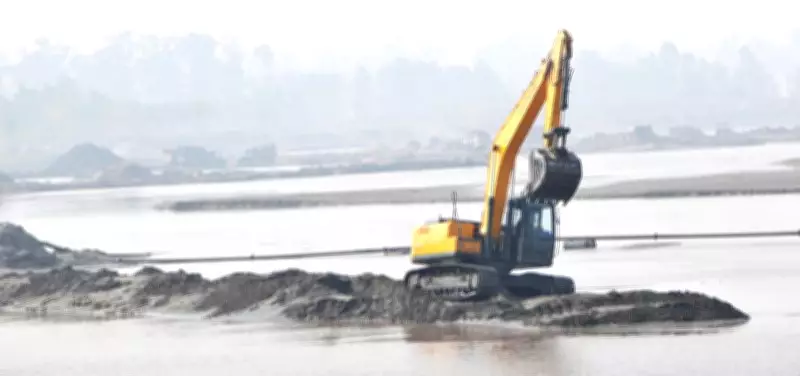
Centre Assigns State Mining Departments as Nodal Agencies for DSRs
The Centre has designated State Mining Departments as the nodal authorities responsible for preparing and updating District Survey Reports (DSRs) related to sand mining, riverbed mining, and other minor minerals. The Union Environment Ministry issued an office memorandum confirming this move, which aims to streamline regulatory oversight of minor mineral extraction activities.
A DSR identifies locations within a district where minerals such as sand have naturally accumulated and where mining can be safely permitted. It also delineates areas where mining should be prohibited, including zones affected by erosion or situated near roads, bridges, buildings, dams, or other critical infrastructure.
Background and Legal Directive
The ministry cited an observation from the Kerala High Court, which noted that the provisions of the Environment Impact Assessment (EIA) do not specifically indicate the authority responsible for conducting surveys and preparing DSRs for minor minerals other than sand mining or riverbed mining. The court directed the Ministry to issue an appropriate clarification on this matter.

Following the court's directive, the matter was taken up with the Expert Appraisal Committee. It was decided that to ensure uniform implementation of the provisions relating to the preparation and updating of DSRs, the State Department of Mines and Geology shall serve as the nodal authority.
Preparation and Approval Process
DSRs will be prepared by a sub-divisional committee comprising the sub-divisional magistrate and officers from the Irrigation, Forest, and Pollution Control Departments, along with the District Geologist or Mining Officer. Once drafted, these reports will be submitted to the State Environment Impact Assessment Authority (SEIAA) and the State Expert Appraisal Committee (SEAC) for approval and further processing.
The ministry has also clarified that DSRs can be updated every five years, ensuring they remain current with changing environmental and infrastructural conditions.
Impact on Mining Regulation
This policy change is expected to streamline the regulatory process and strengthen oversight of minor mineral extraction activities, including sand mining operations. By clearly designating the nodal agency, the Centre aims to reduce ambiguity and improve coordination among various departments involved in the preparation of DSRs.
The move is particularly significant for sand mining, which often faces challenges related to illegal extraction and environmental degradation. With a clear framework and defined responsibilities, authorities can better monitor and manage mining activities to ensure sustainable practices.