Chandigarh Reels Under Extended Power Cuts as Weather Exposes Infrastructure Vulnerabilities
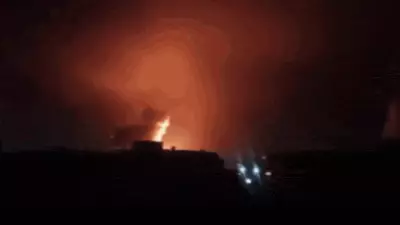
As heavy rain and icy winds swept through Chandigarh, the city's infrastructure vulnerabilities were starkly revealed through prolonged electricity disruptions that left many areas without power for over 12 to 14 hours. This extended outage represents an unusual occurrence for the planned city, with supply remaining unrestored in several localities even as reports were being filed.
Resident Outrage Over Prolonged Disruptions
Widespread frustration has emerged among Chandigarh residents regarding the duration of power cuts, with many questioning the excessive time taken to restore electricity services. Power disruptions commenced immediately after rainfall began during the intervening night of Thursday and Friday in certain sectors, while other areas experienced outages starting early Friday morning.
Baljinder Singh Bittu, Chairman of the Federation of Sector Welfare Association Chandigarh (Foswac) and a resident of Sector 21, expressed profound disappointment with the situation. "It is shocking that in a city like Chandigarh, power supply can be disrupted for 12 to 14 hours. It is all the more concerning that bad weather was predicted weeks ago, yet no preparatory measures were implemented to prevent such massive-scale power breakdowns. Increasingly, it feels like we're living in Zirakpur rather than in independent India's first planned city," Bittu remarked.

Sector-Specific Challenges and Complaints
In Sector 13, where electricity failures began early Friday, Colonel Gursewak Singh (retired), President of the Modern Housing Complex Resident Welfare Association, criticized the sluggish response to technical faults. "A fallen tree on power lines caused area-wide disruption, but the fault rectification response was exceptionally slow. How long should it take to remove a tree? Here, we endured power cuts exceeding eight hours," he stated.
Southern sectors including Sector 48 faced similar challenges. Resident Ramandeep Singh reported, "We experienced electricity absence for over eight to nine hours. Inverters fail when operating for such extended periods. We couldn't even recharge mobile phones. Such extensive power disruptions haven't occurred in recent memory."
Infrastructure and Management Criticisms
R K Garg, President of the Second Innings Association in Chandigarh, identified poor tree management as a significant factor contributing to power disruptions. "Weak, diseased, and structurally unstable trees require timely identification and corrective measures. Yet, annual negligence persists, forcing citizens to bear the consequences," Garg emphasized.
Technical Breakdown Analysis
The scale of infrastructure failure became evident through recorded data:
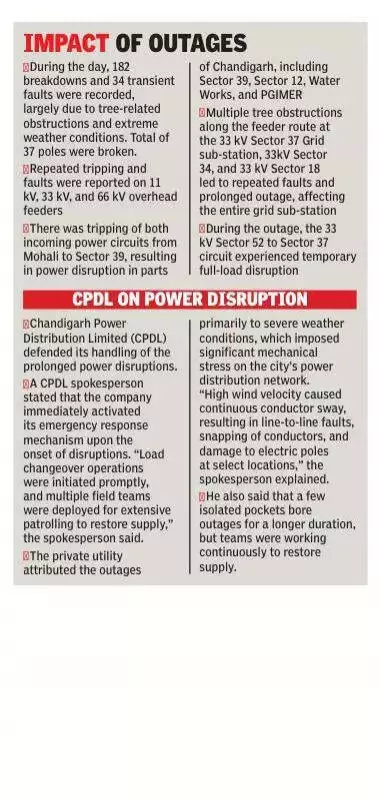
- During the day, 182 breakdowns and 34 transient faults were documented, primarily due to tree-related obstructions and extreme weather conditions
- 37 electric poles suffered breakage during the incidents
- Repeated tripping and faults affected 11 kV, 33 kV, and 66 kV overhead feeders
- Both incoming power circuits from Mohali to Sector 39 experienced tripping, disrupting electricity in Chandigarh areas including Sector 39, Sector 12, Water Works, and PGIMER
- Multiple tree obstructions along feeder routes at 33 kV Sector 37 Grid sub-station, 33 kV Sector 34, and 33 kV Sector 18 caused repeated faults and prolonged outages affecting entire grid sub-stations
- The 33 kV Sector 52 to Sector 37 circuit underwent temporary full-load disruption during the outage period
Utility Company's Response and Explanation
Chandigarh Power Distribution Limited (CPDL) defended its handling of the extended power disruptions through an official spokesperson. The company stated it immediately activated emergency response mechanisms when disruptions began. "Load changeover operations commenced promptly, with multiple field teams deployed for extensive patrolling to restore supply," the spokesperson explained.

The private utility attributed outages primarily to severe weather conditions that imposed significant mechanical stress on the city's power distribution network. "High wind velocity caused continuous conductor sway, resulting in line-to-line faults, conductor snapping, and electric pole damage at specific locations," the spokesperson detailed.
"Widespread tree uprooting and large branch falls on overhead power lines, causing pole and line breakage, emerged as primary breakdown causes. Power restoration occurred in most areas, with several teams working through inclement weather to resume electricity supply," the spokesperson added. The utility acknowledged that isolated pockets experienced longer-duration outages but confirmed continuous team efforts to restore complete supply.